Galerie Franck Baptiste
7 quai Voltaire
75007 Paris
FRANCE
Tél. +33 (0)6 45 88 53 58
Monday to Saturday
10h - 13h & 14h - 18h30
- FR
- EN

Furniture
18th century
1
Furniture du 18th century
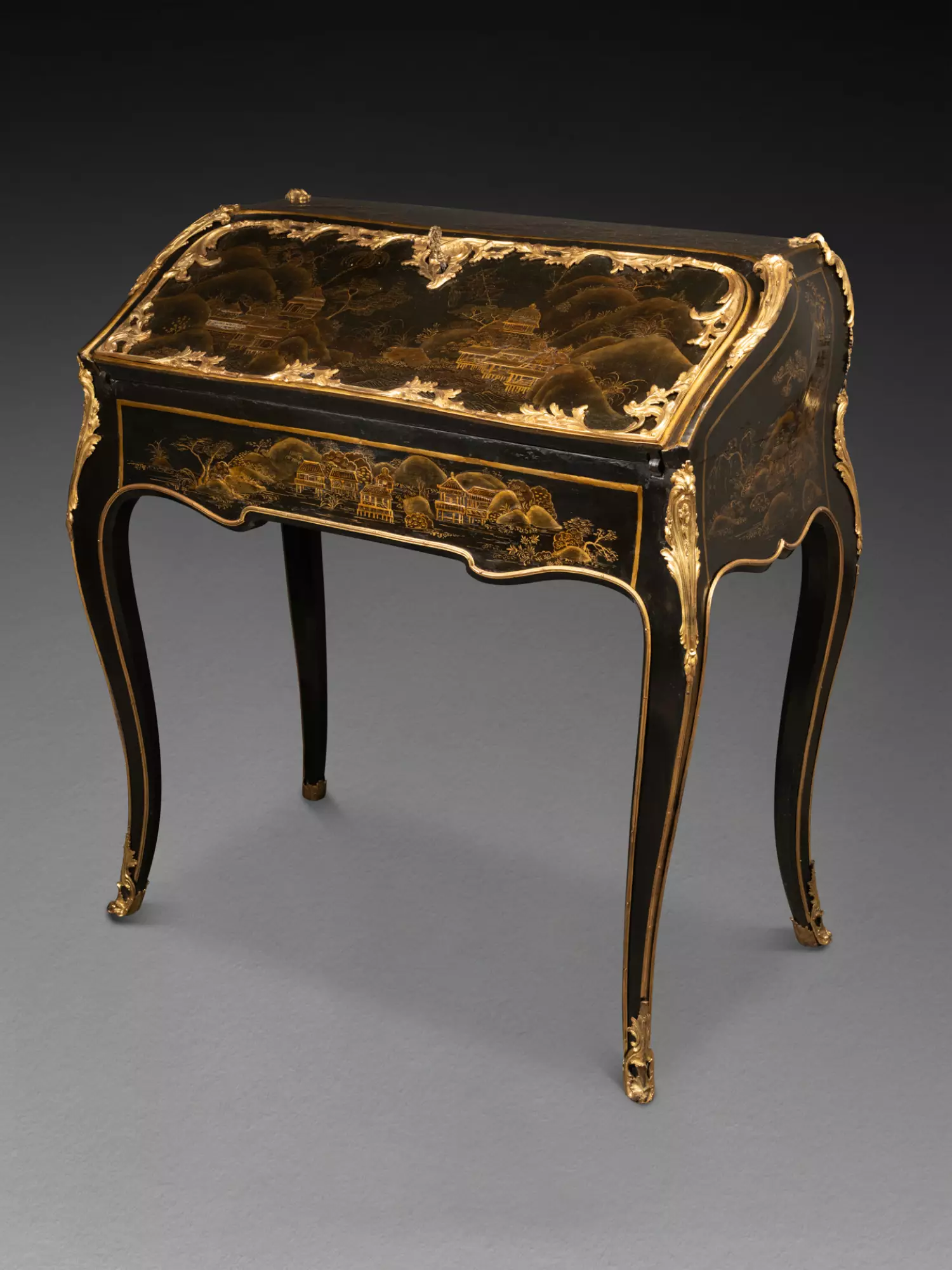
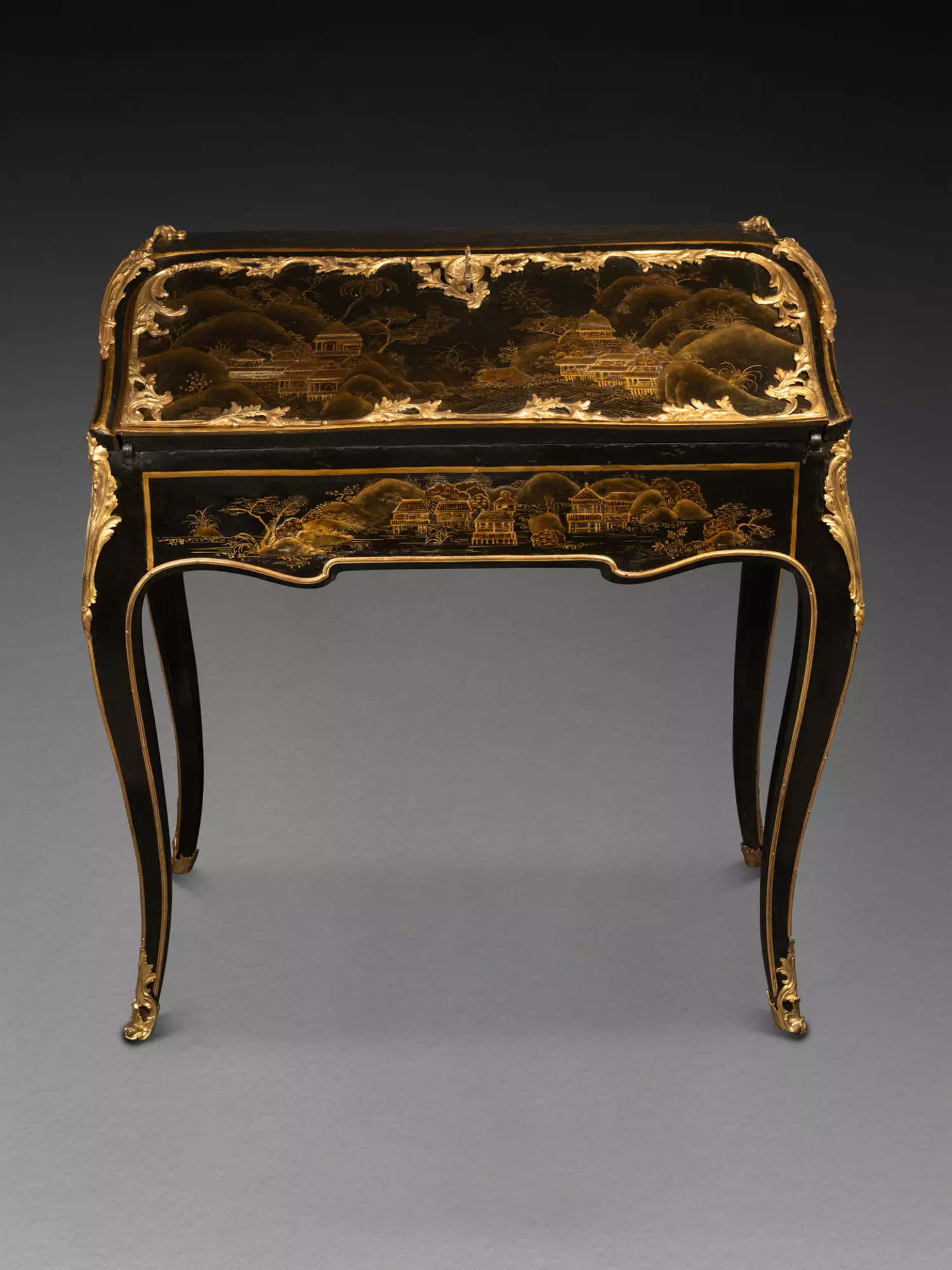
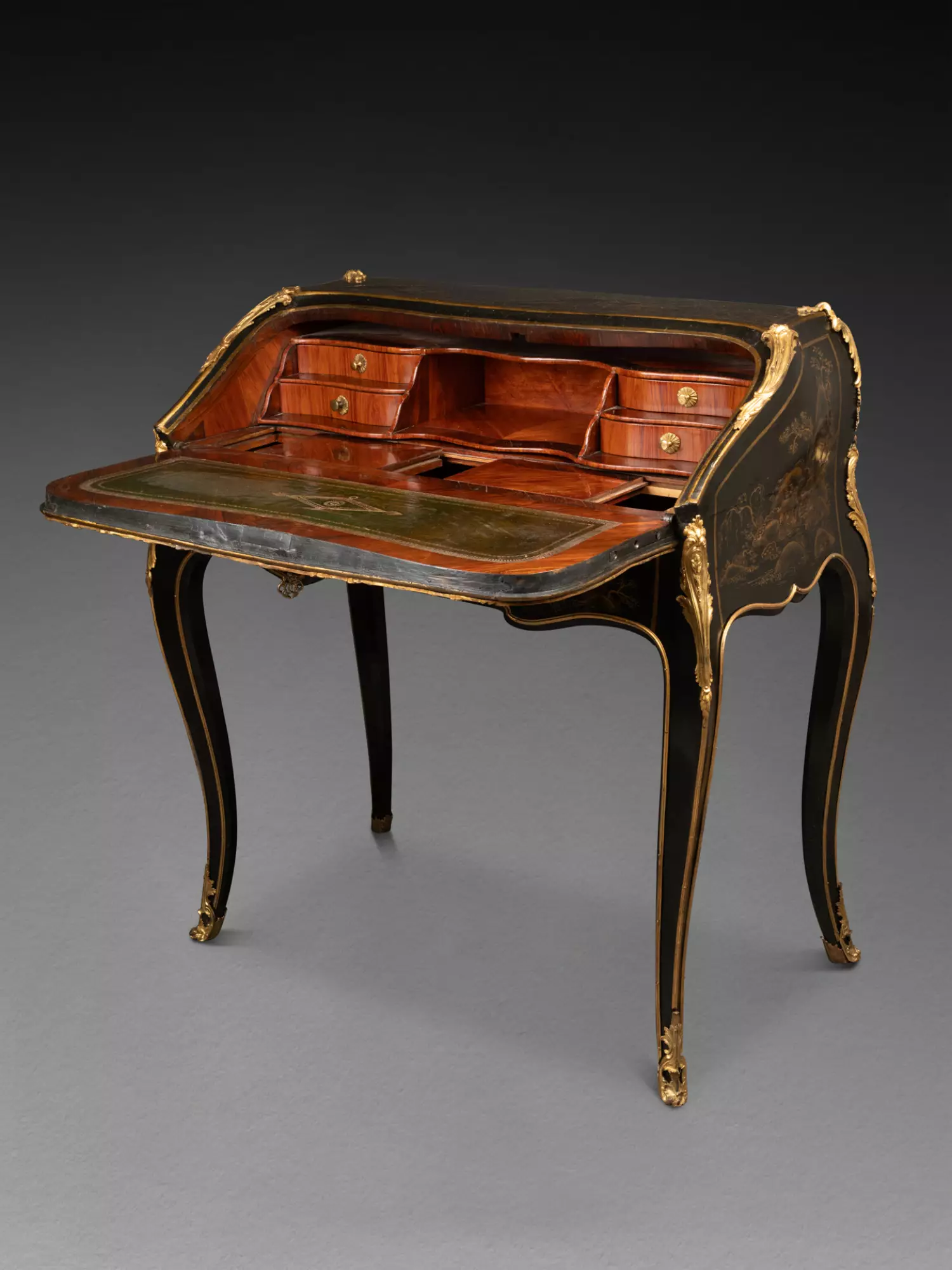
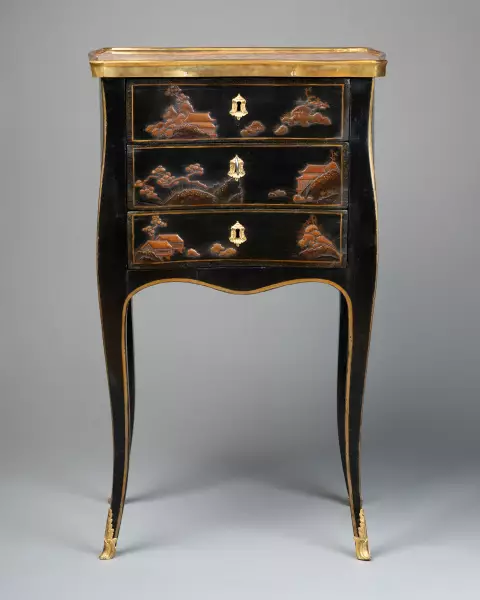
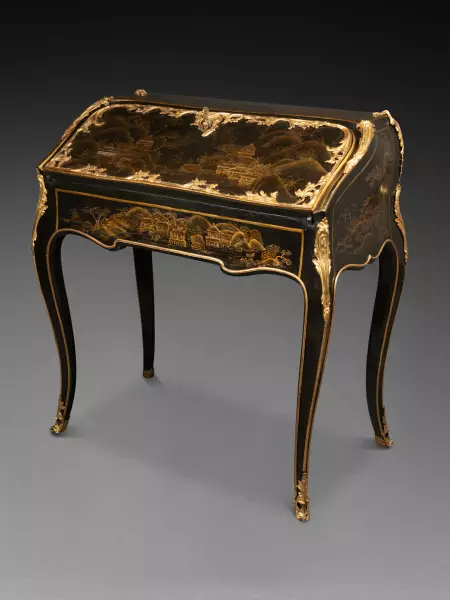
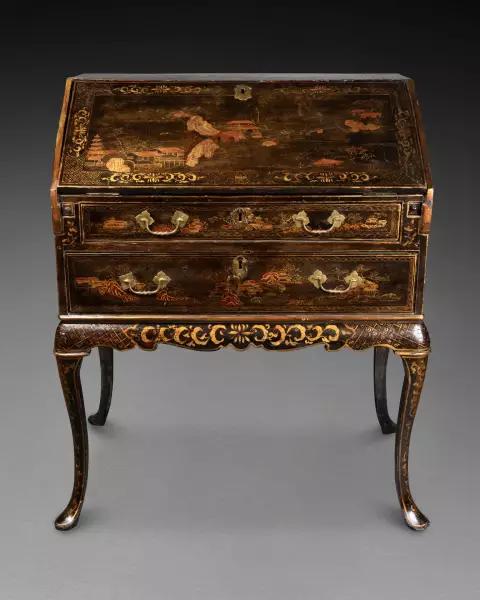
Slant-front desk in Martin varnish by F. Rubestuck, Paris circa 1770
DIMENSIONS : l. 32.68 .inH. 35.43 .inP. 18.11 .in
MATERIAUX : Vernis Martin, ormulu
PROVENANCE : Paris, France
PRICE : Contact us
REQUEST INFORMATION
?A rare slant-front desk with a Martin varnish finish.
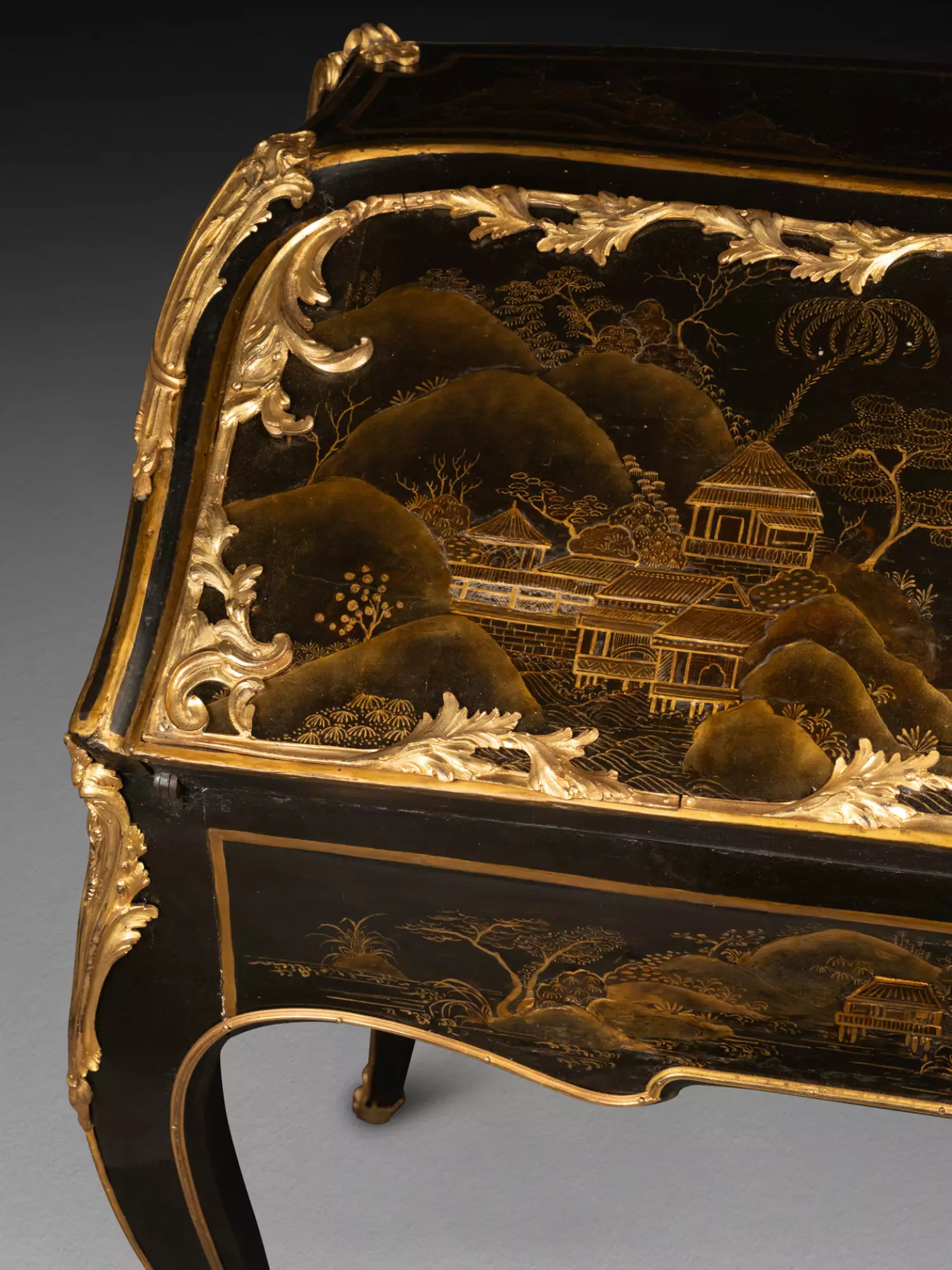
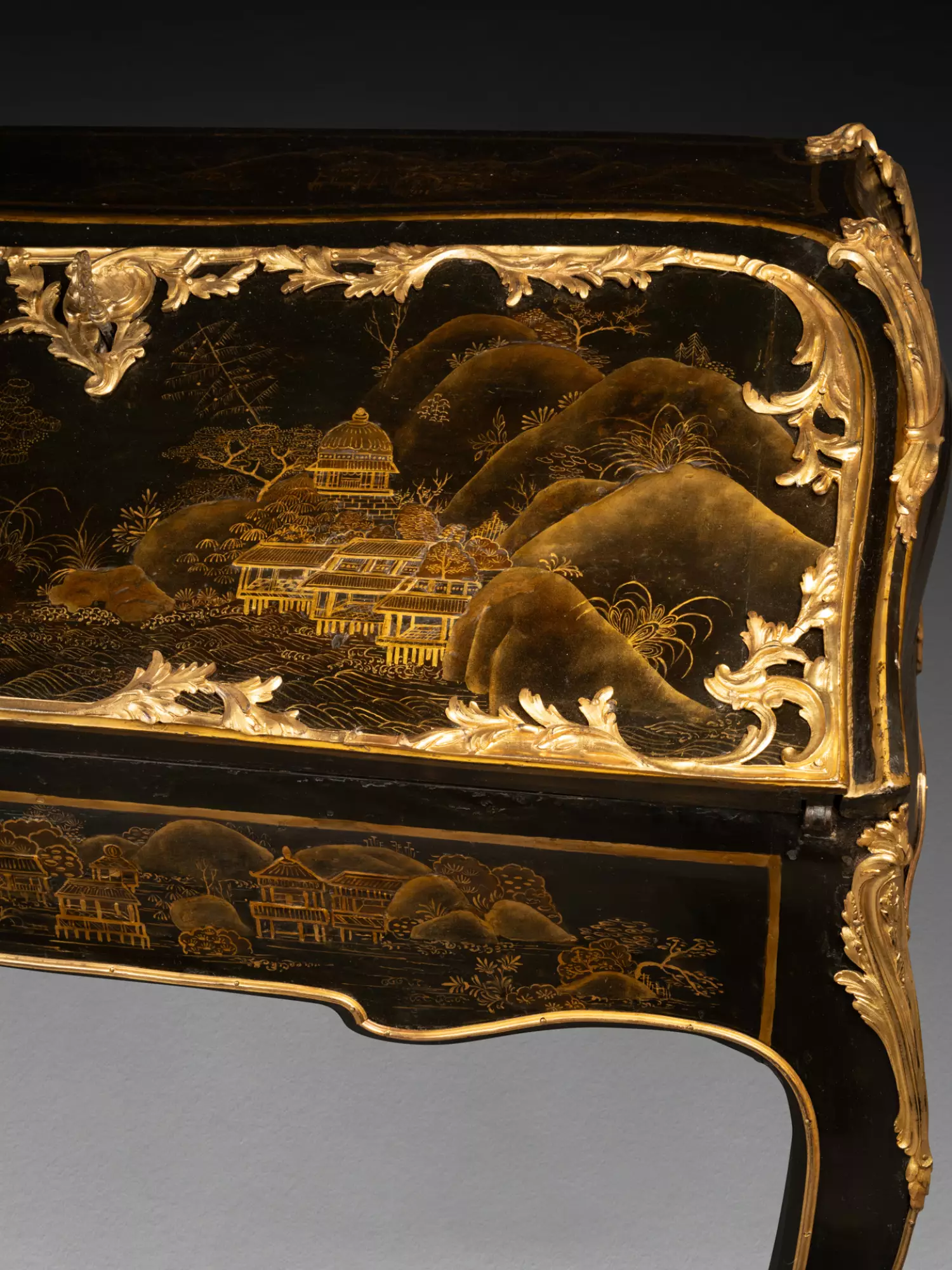
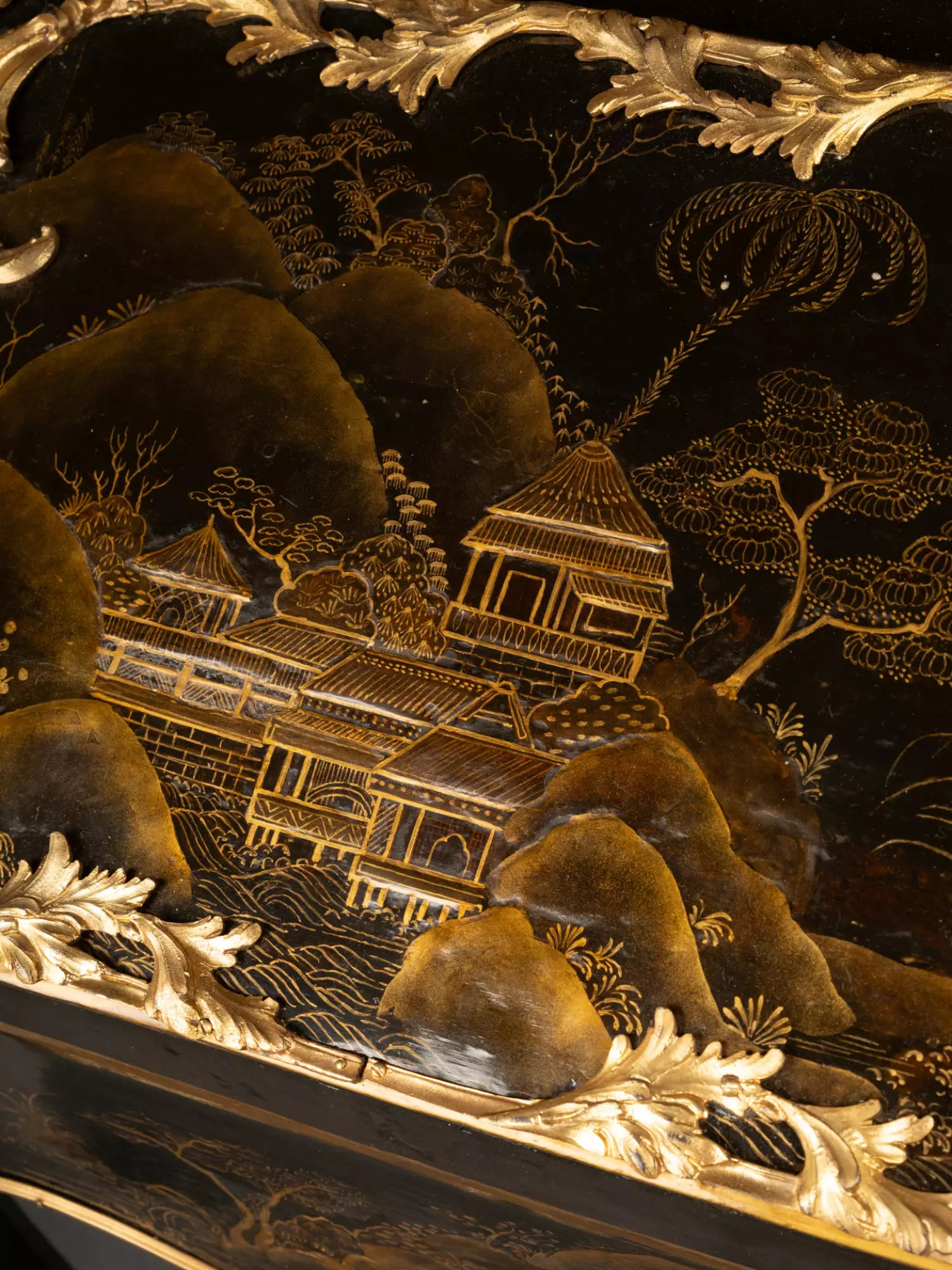
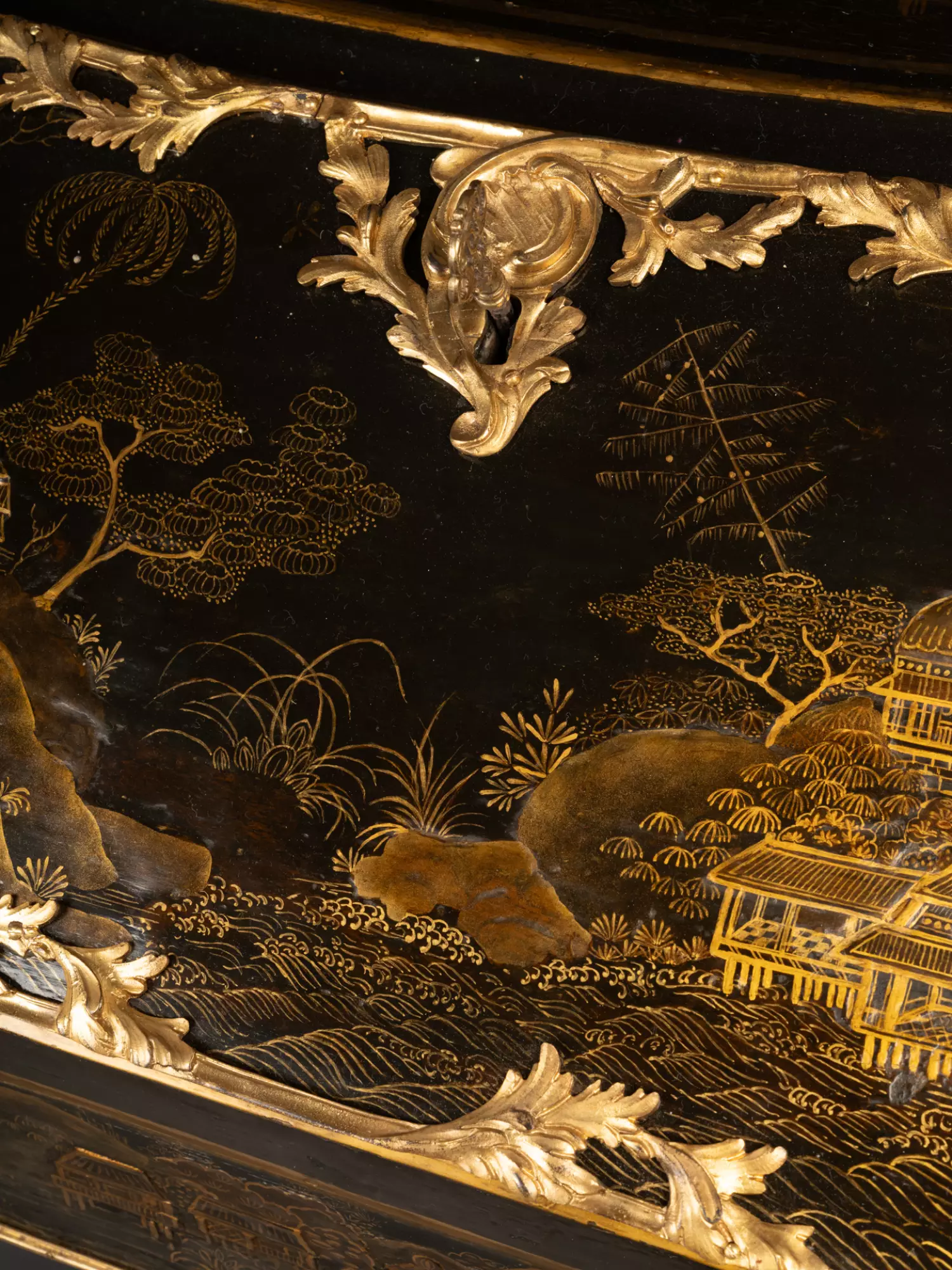
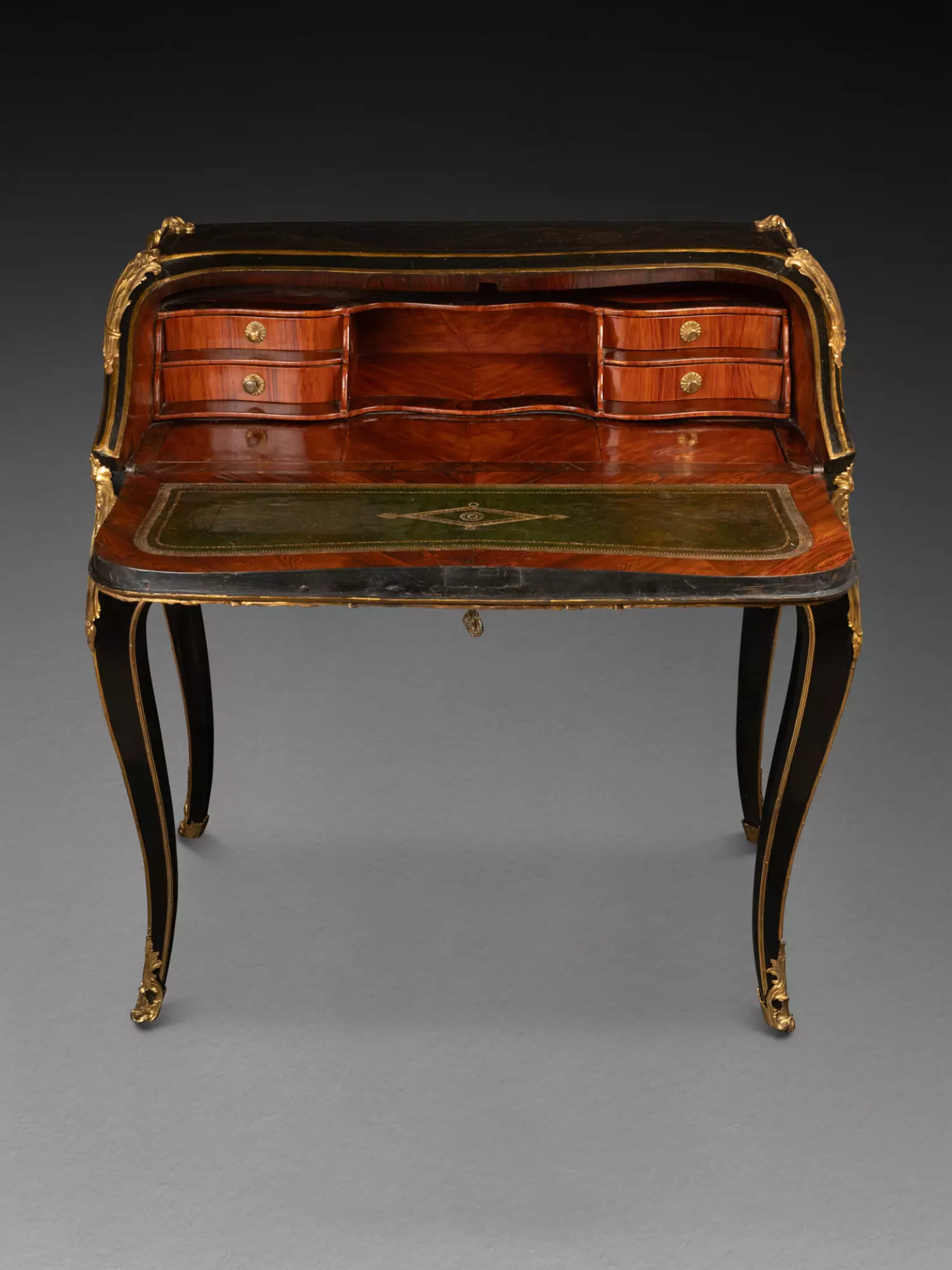
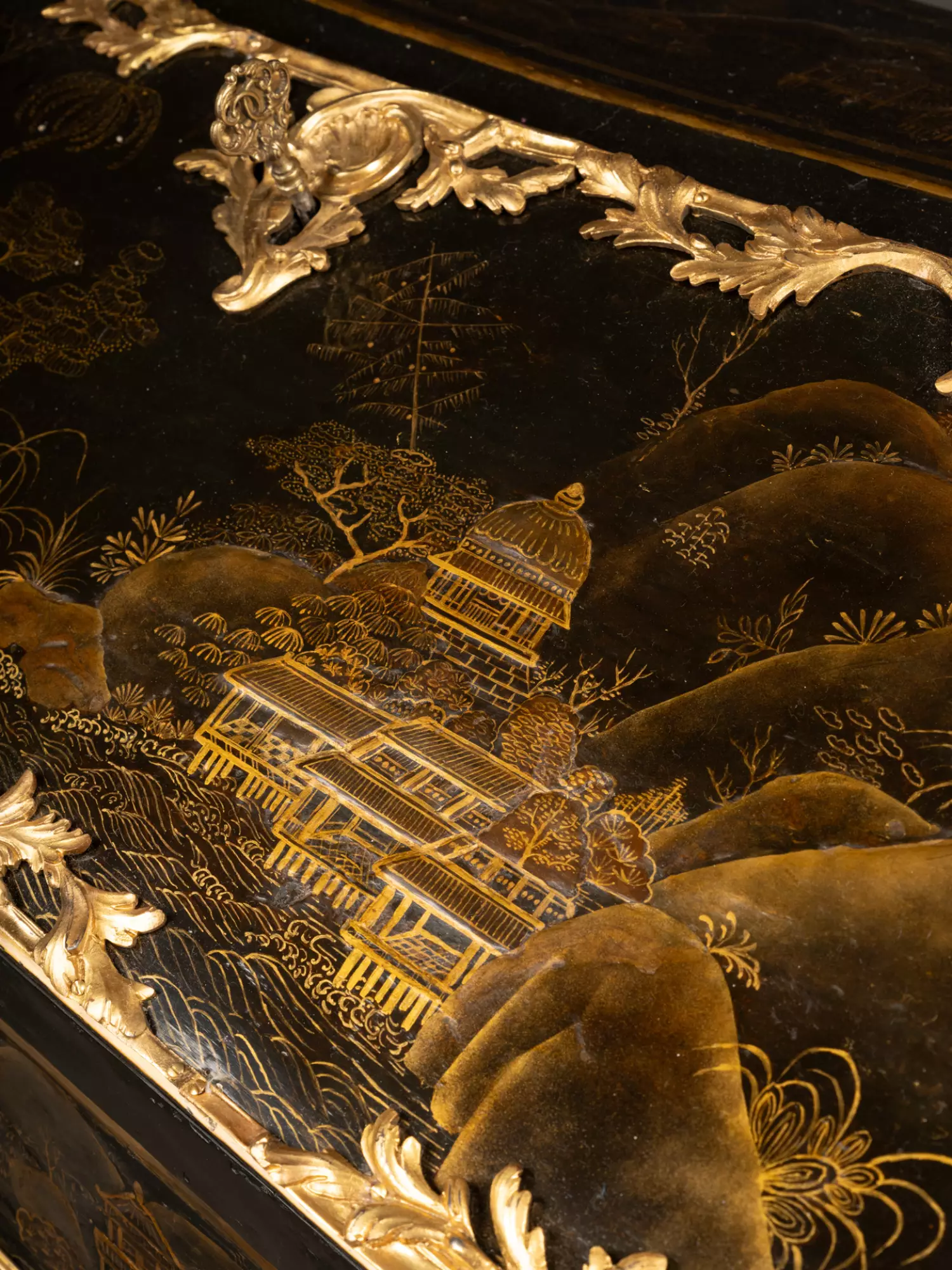
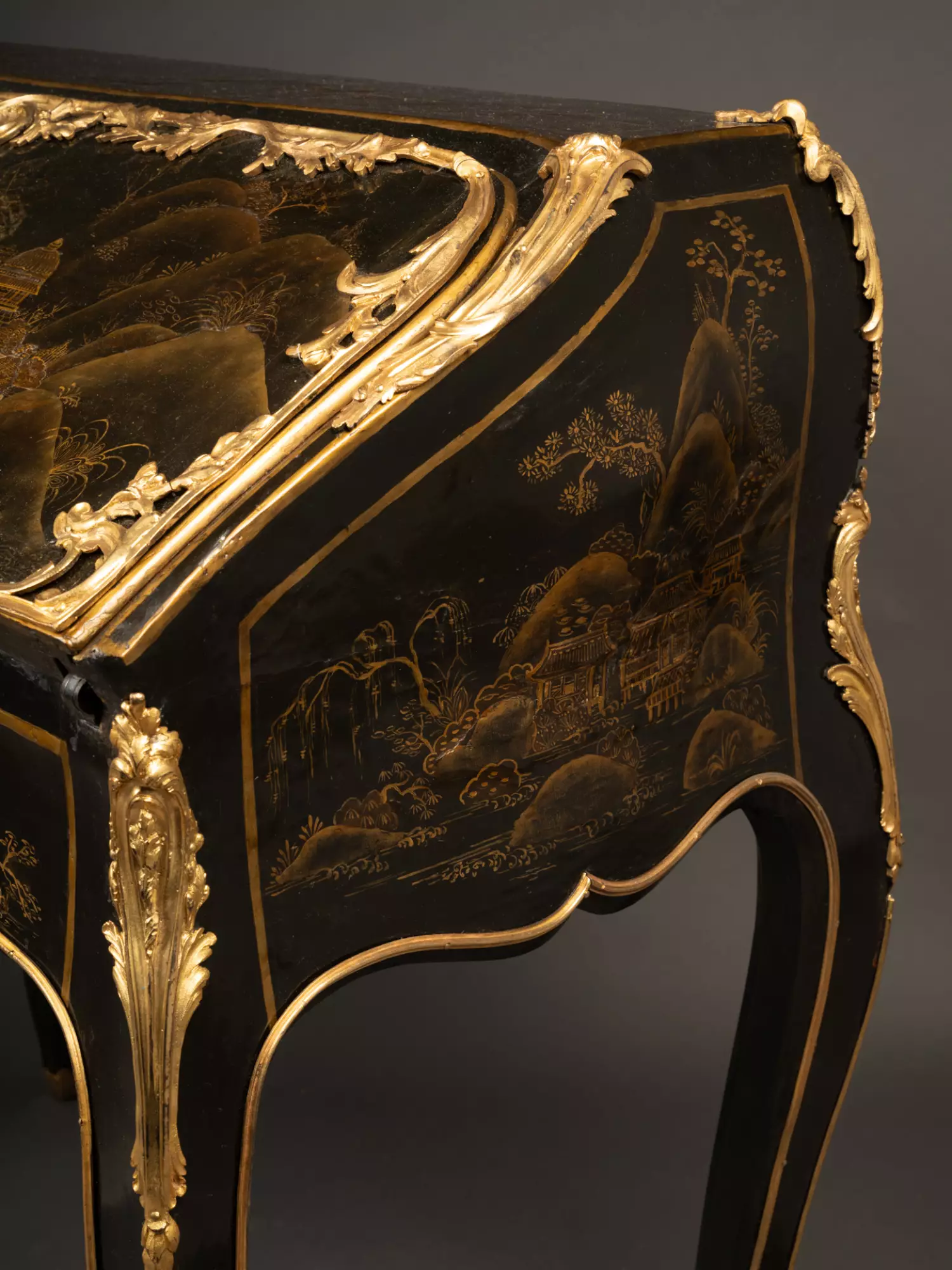
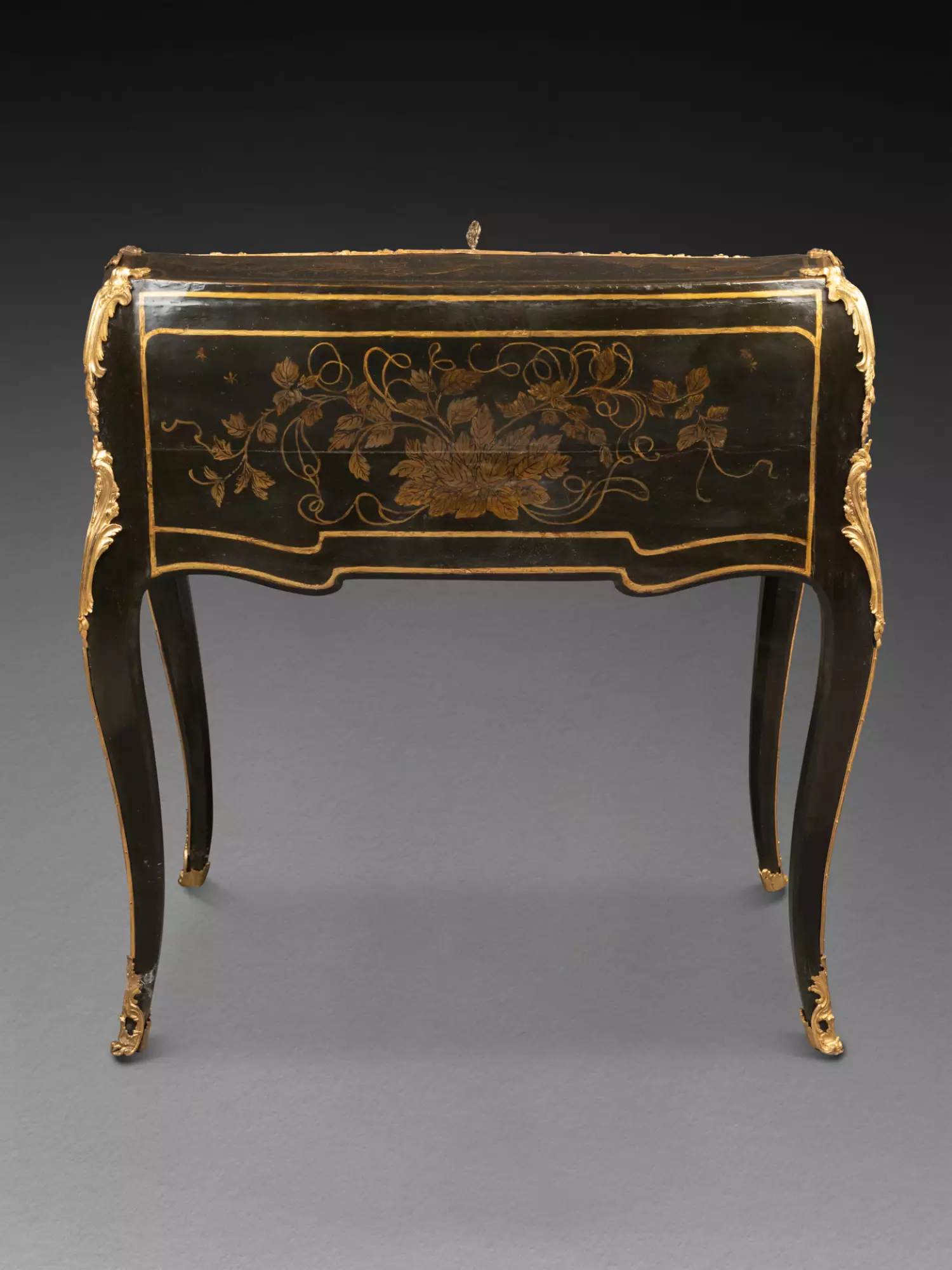
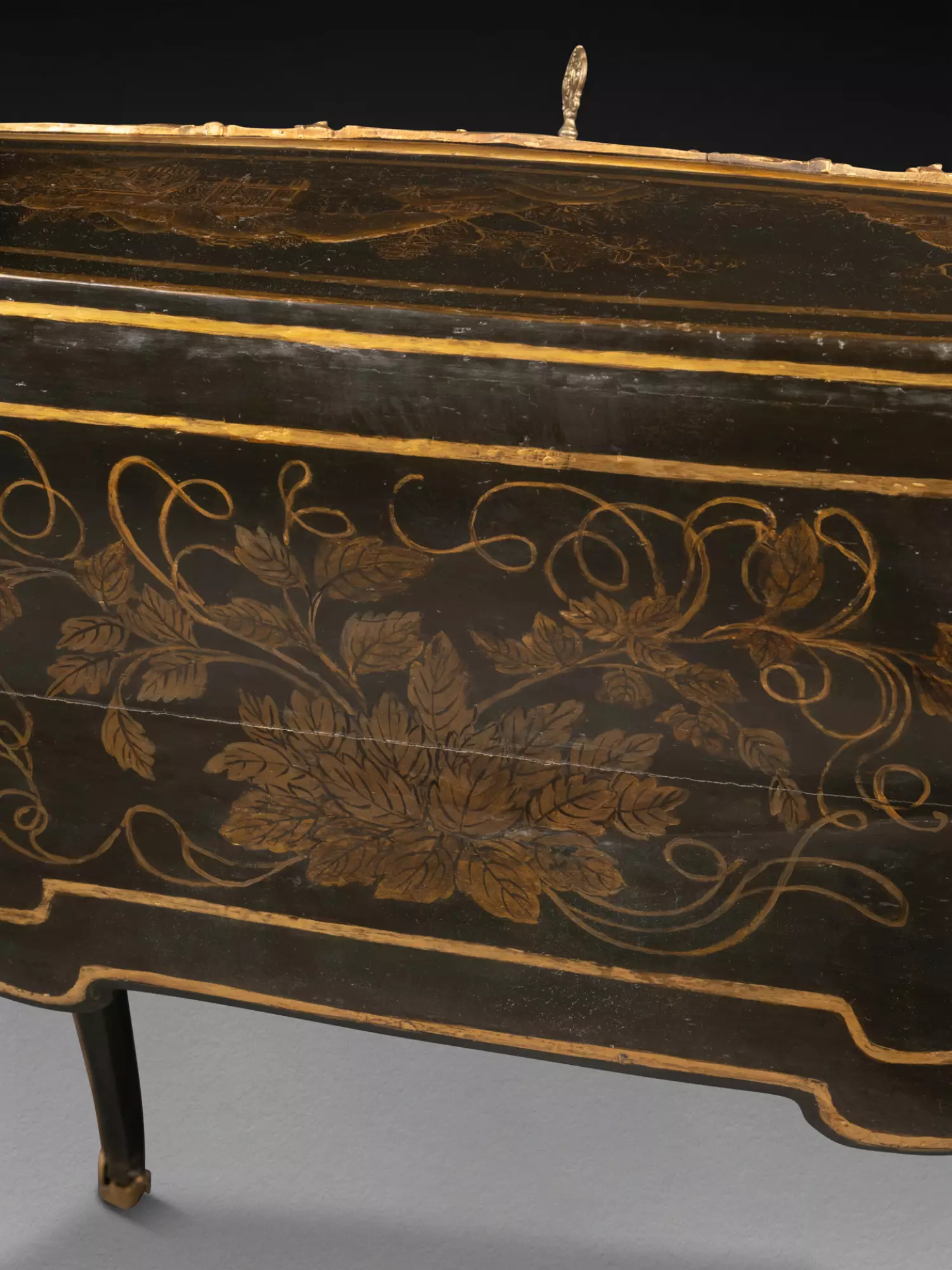
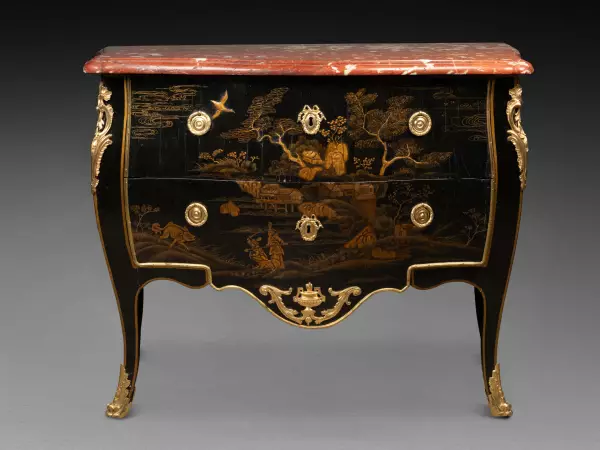
The curved frame, with its curved front and sides, rests on four strongly cabriole legs connected by shaped stretchers. The entire desk is decorated with gold powder on a black Martin varnish background, imitating Japanese lacquer, depicting lakeside landscapes enlivened by pavilions and stylized vegetation.
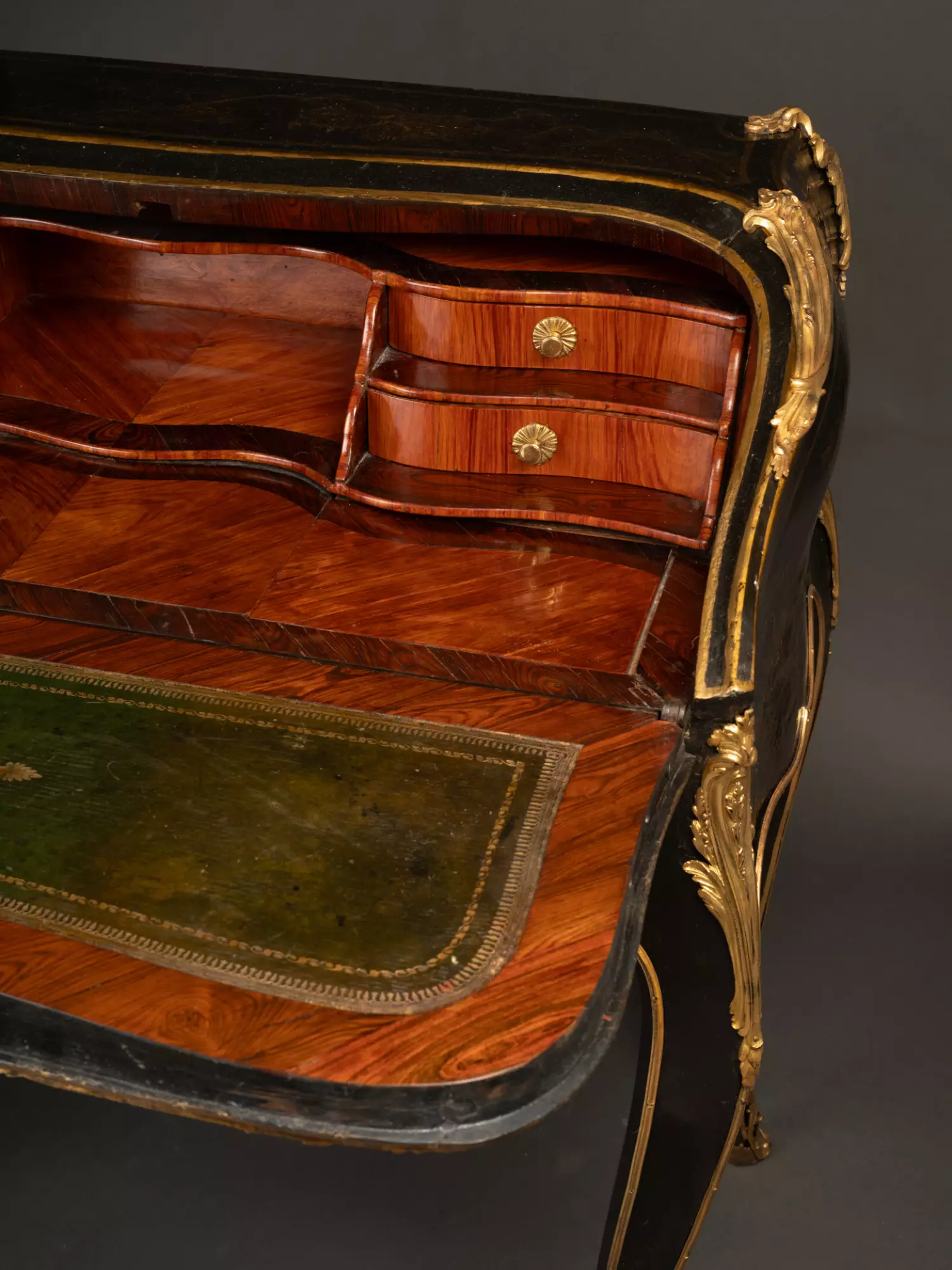
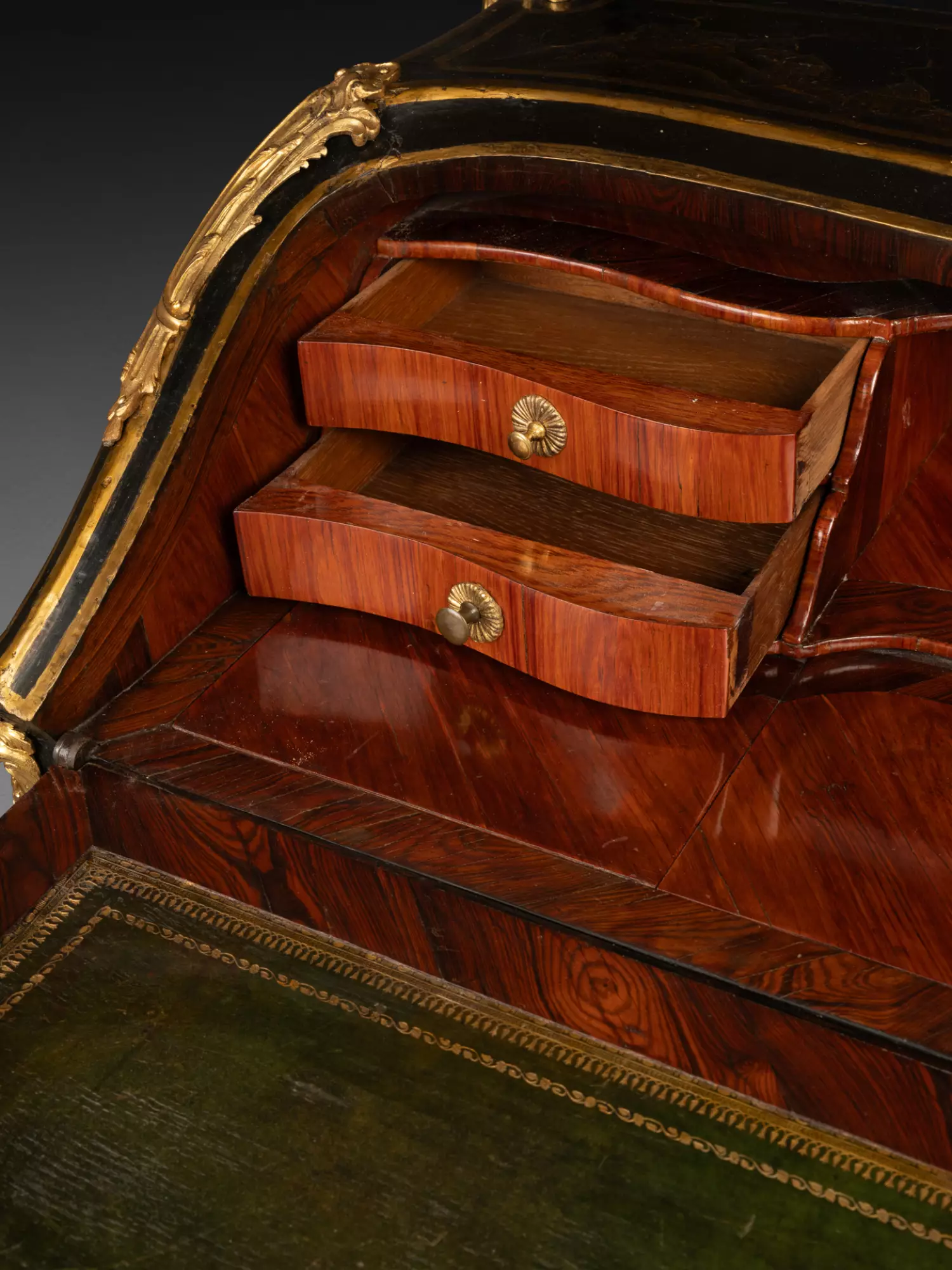
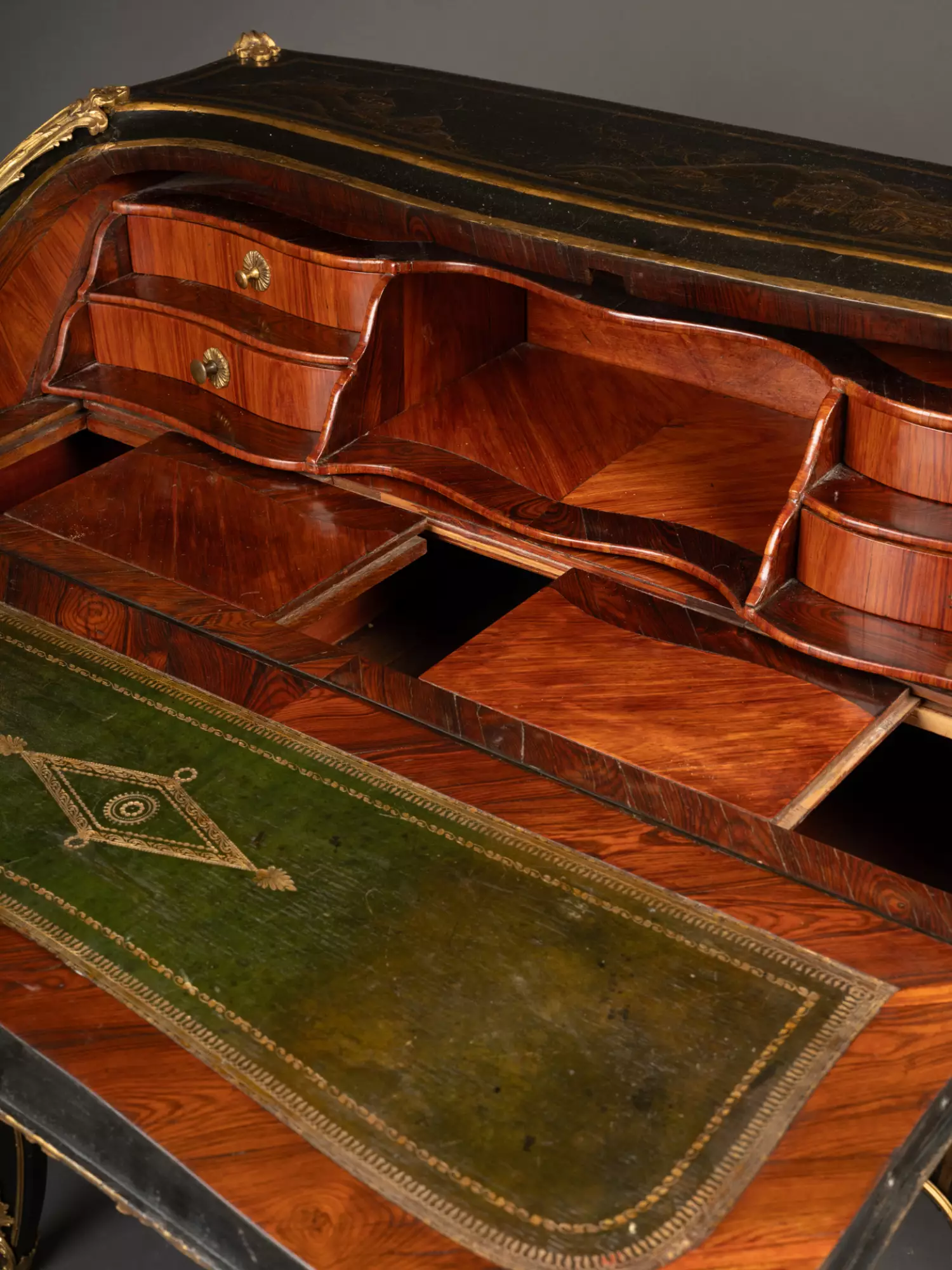
The drop-front reveals a rich interior veneered in violet wood, fitted with four drawers separated by a central compartment. The theater-style writing surface features a sliding panel that reveals three secret compartments. The reverse of the drop-front, lined with green leather tooled in gold, serves as a writing surface.
The desk is adorned with a very rich array of finely chased and mercury-gilded bronze mounts, including drops, openwork sabots, spandrels, protective corner pieces, and a rare foliate frieze frame.
In excellent condition. The stamp F. RUBESTUCK and the guild mark are located under the front crossbar.
Parisian work from the transition between the Louis XV and Louis XVI periods by François Rubestuck, Paris circa 1770-1775.
An inventory number painted in black ink, "No. 11," is present on the base: its typography, very similar to the numbering of the royal furniture repository, suggests that our piece of furniture belonged to the crown. Despite extensive research, the precise origin of this piece could not be identified, but it is possible that the desk became part of the royal furniture after the death of Rubestuck, whose property was seized and given to the king by right of escheat, the cabinetmaker having never been naturalized French.
François Rubestuck (1722–1785). Cabinetmaker. Received his master's certificate in Paris on May 7, 1766.
Originally from Germany, François Rubestuck settled in Paris where he became a master craftsman in 1766. Working on the rue de Charenton and later on the rue Traversière-Saint-Antoine, he belonged to the generation of cabinetmakers who ensured the transition from the Louis XV style to the more austere taste of Louis XVI's reign. His work includes commodes, desks, and secretaries with elegant curves, often adorned with Martin varnish, meticulous marquetry, and finely chased gilt bronze mounts, demonstrating refined craftsmanship and a balanced sense of proportion. His rare pieces reveal a cultivated artisan with close ties to the finest workshops of the Faubourg Saint-Antoine. Rubestuck died in Paris in 1785, without having been naturalized as a Frenchman, so that, by right of escheat, all his property was seized and returned to the king.