Galerie Franck Baptiste
7 quai Voltaire
75007 Paris
FRANCE
Tél. +33 (0)6 45 88 53 58
Monday to Saturday
10h - 13h & 14h - 18h30
- FR
- EN

Works of Art
19th century
1
Works of Art du 19th century
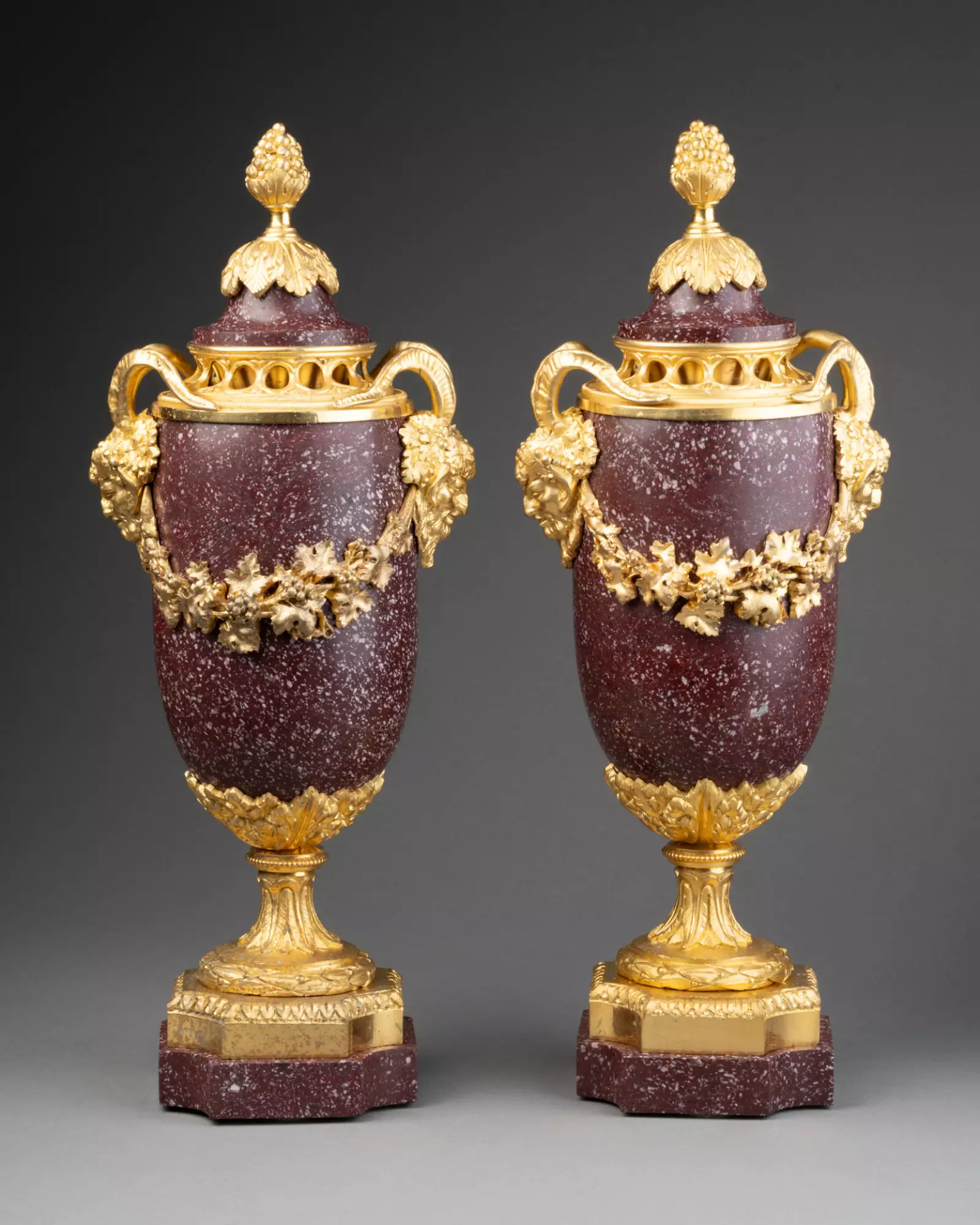
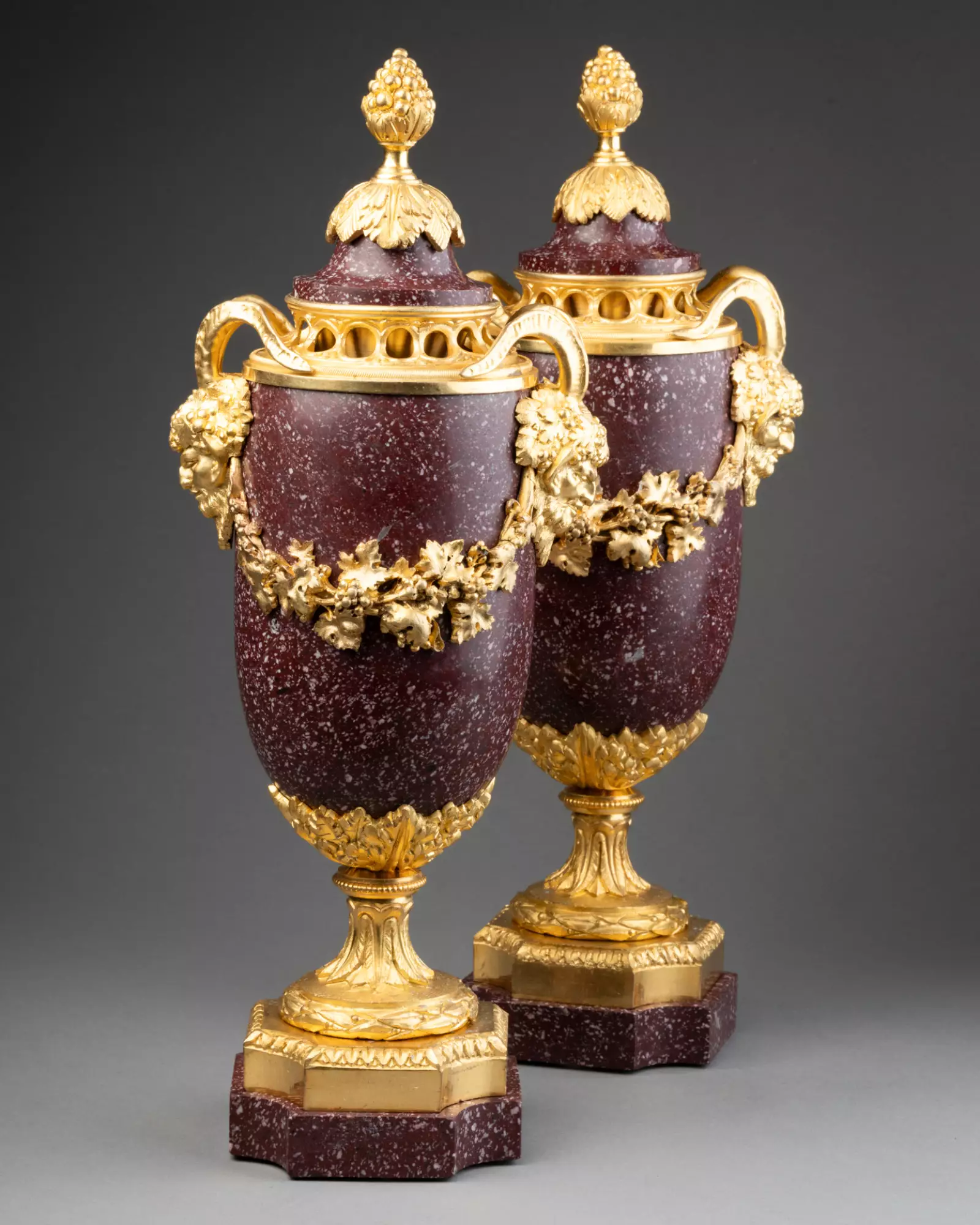
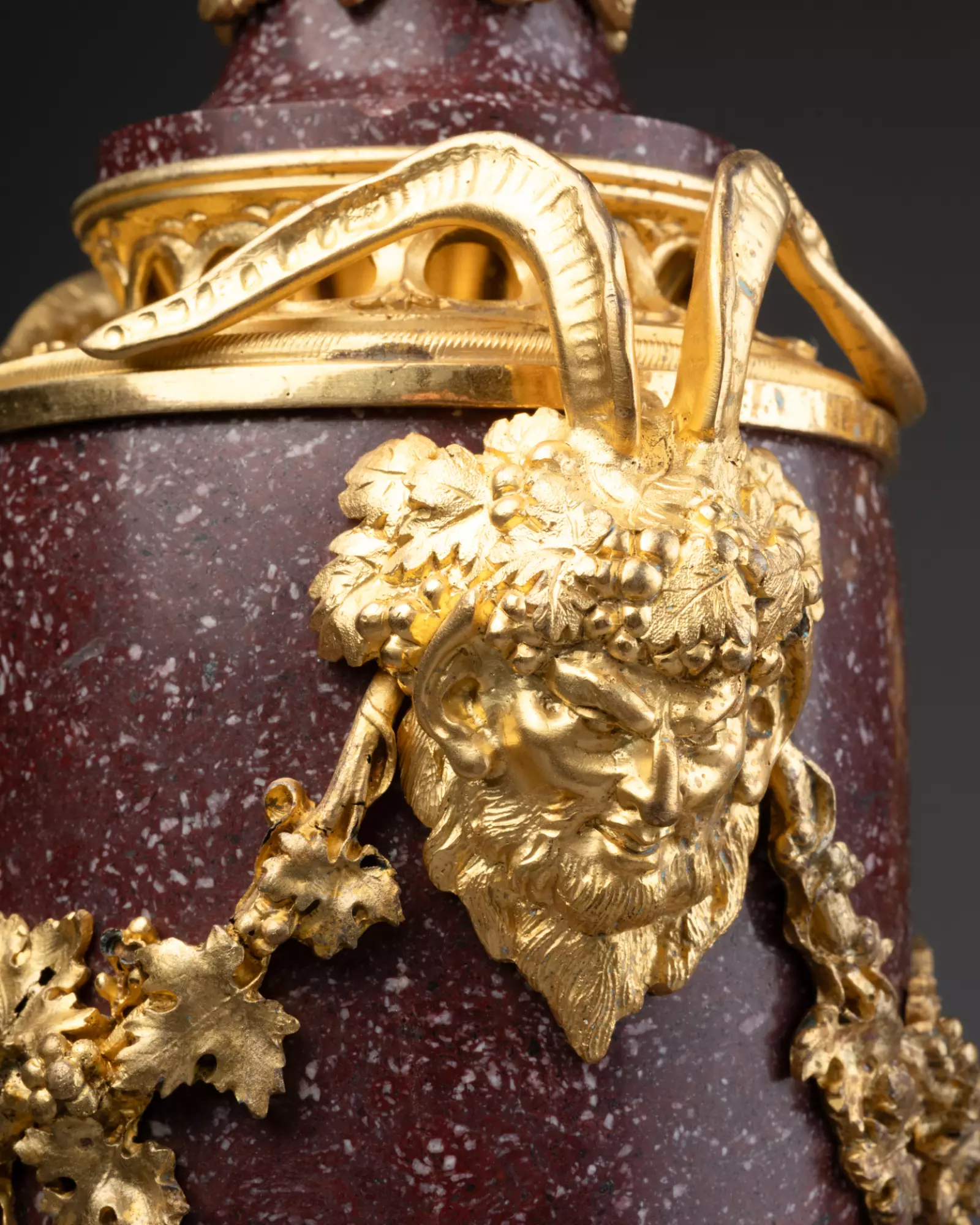
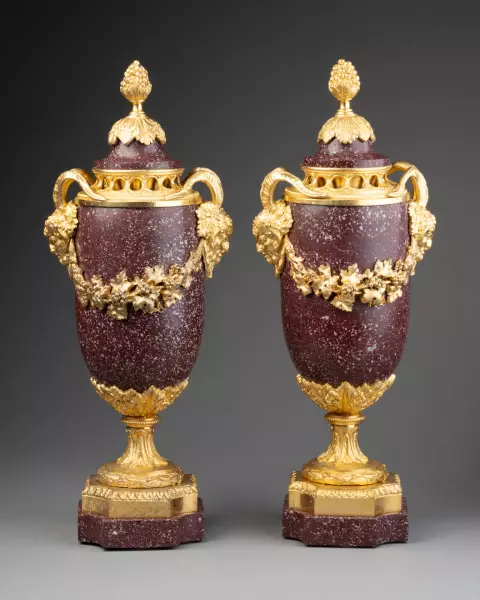
Pair of Porphyry Pot-pourri Jars, Rome, circa 1830
DIMENSIONS : H. 12.99 .in
MATERIAUX : Egyptian pophyry, ormolu
PROVENANCE : Italia-Roma
PRICE : Contact us
REQUEST INFORMATION
?Pair of Porphyry Potpourri Jars, Rome, circa 1830
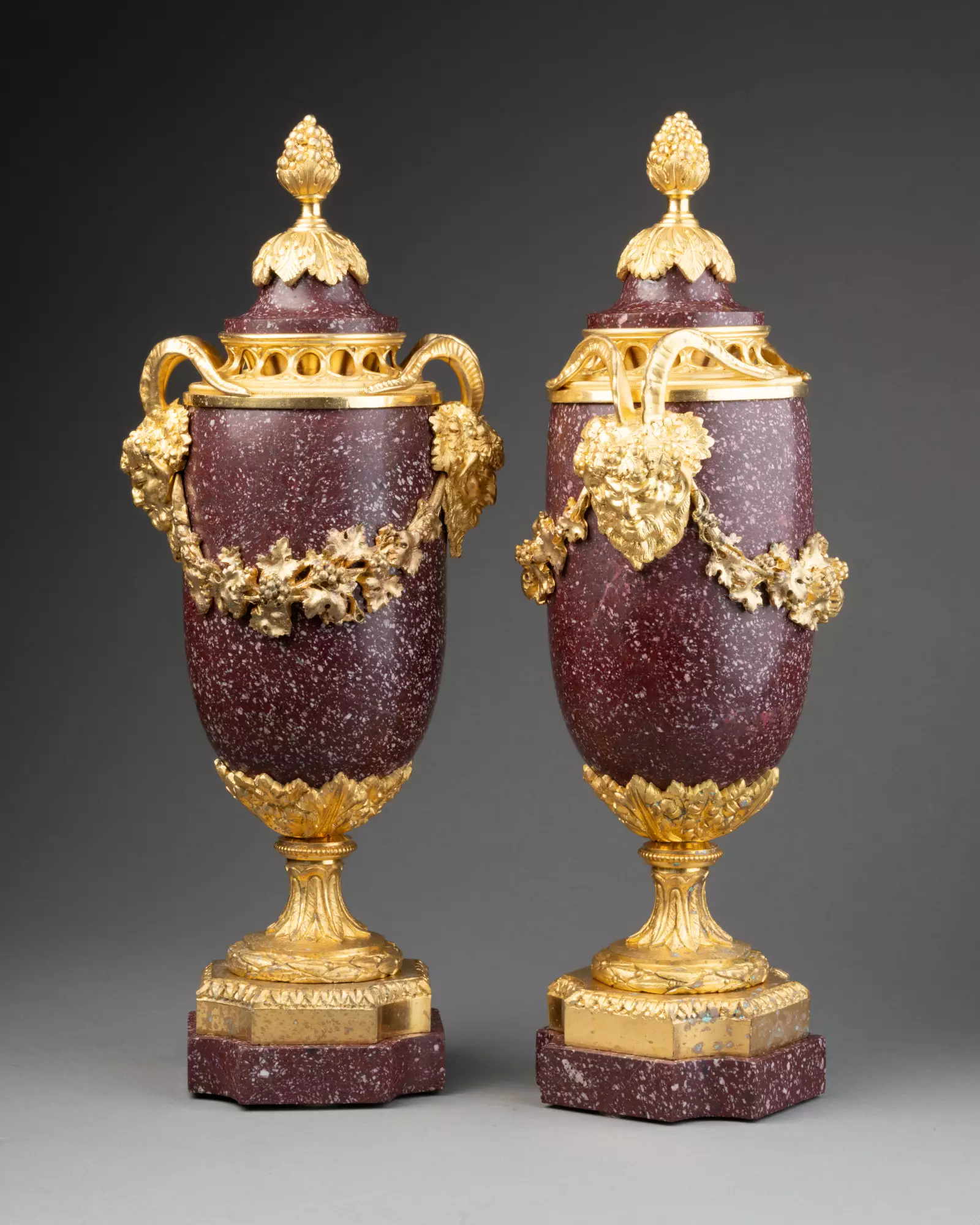
A rare pair of potpourri jars in imperial purple porphyry from Egypt and finely chased and mercury-gilded bronze.
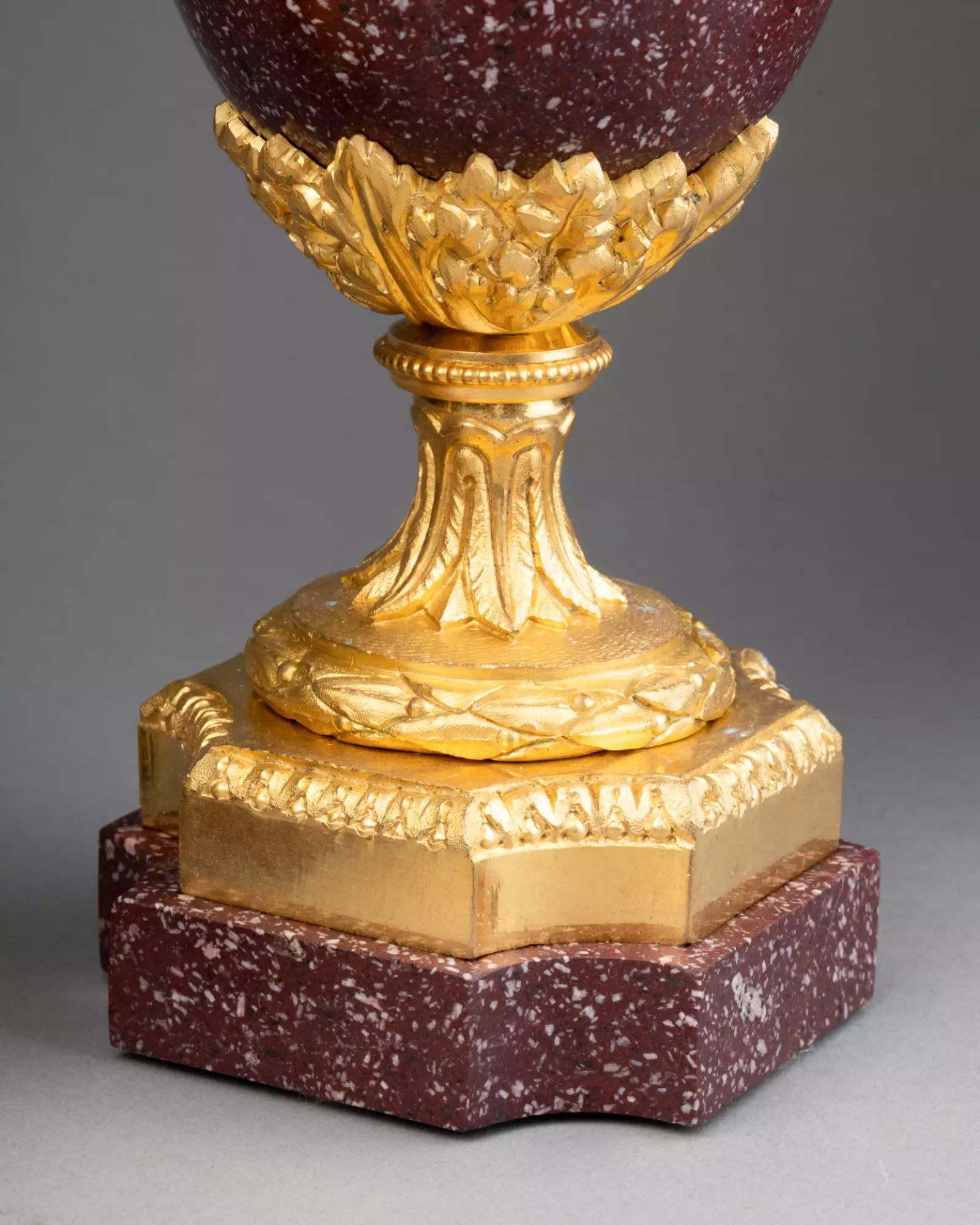
The quatrefoil porphyry bases are surmounted by bronze pedestals decorated with radiating motifs encircled by laurel friezes.
These pedestals support palmette finials that hold the ovoid porphyry bodies.
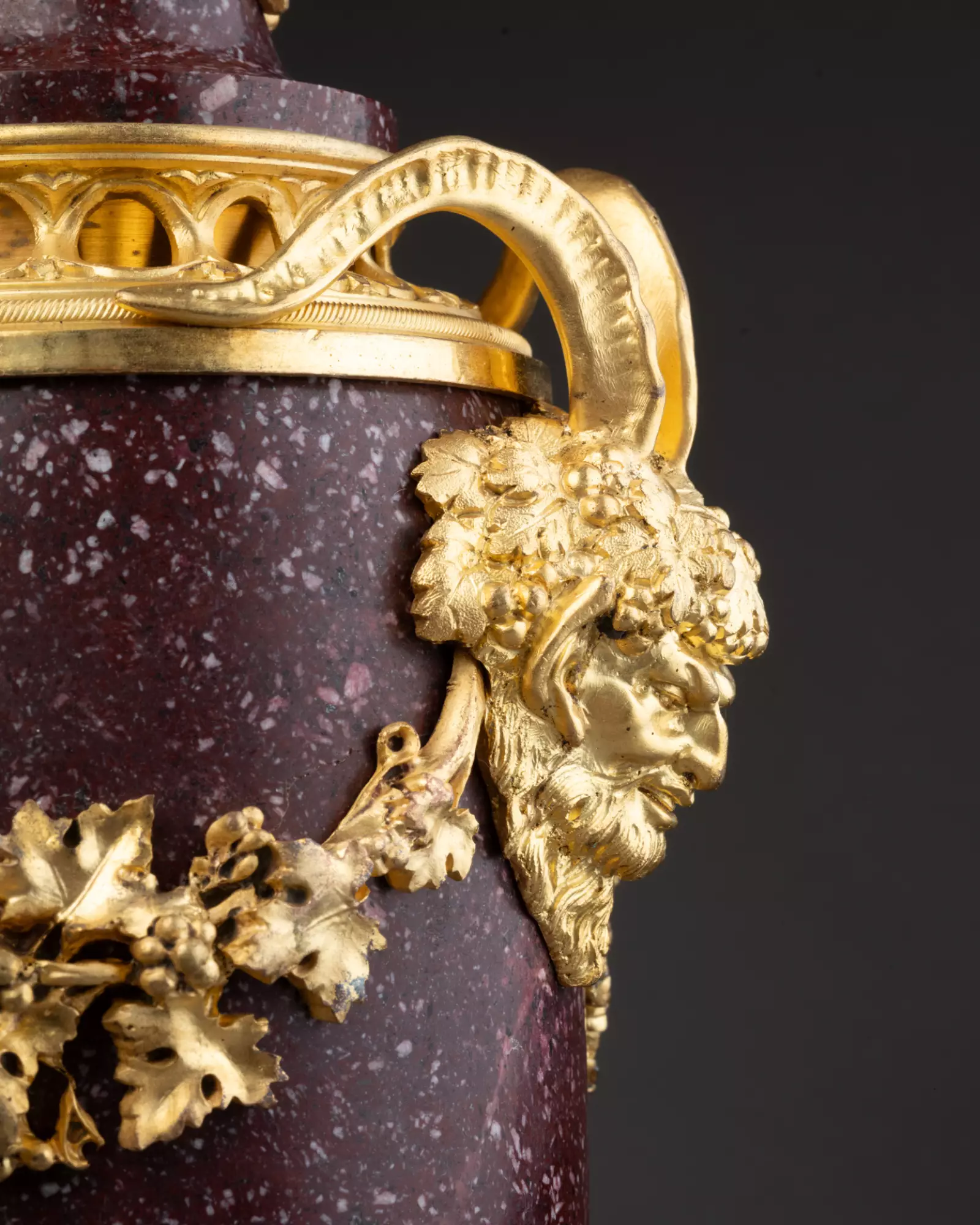
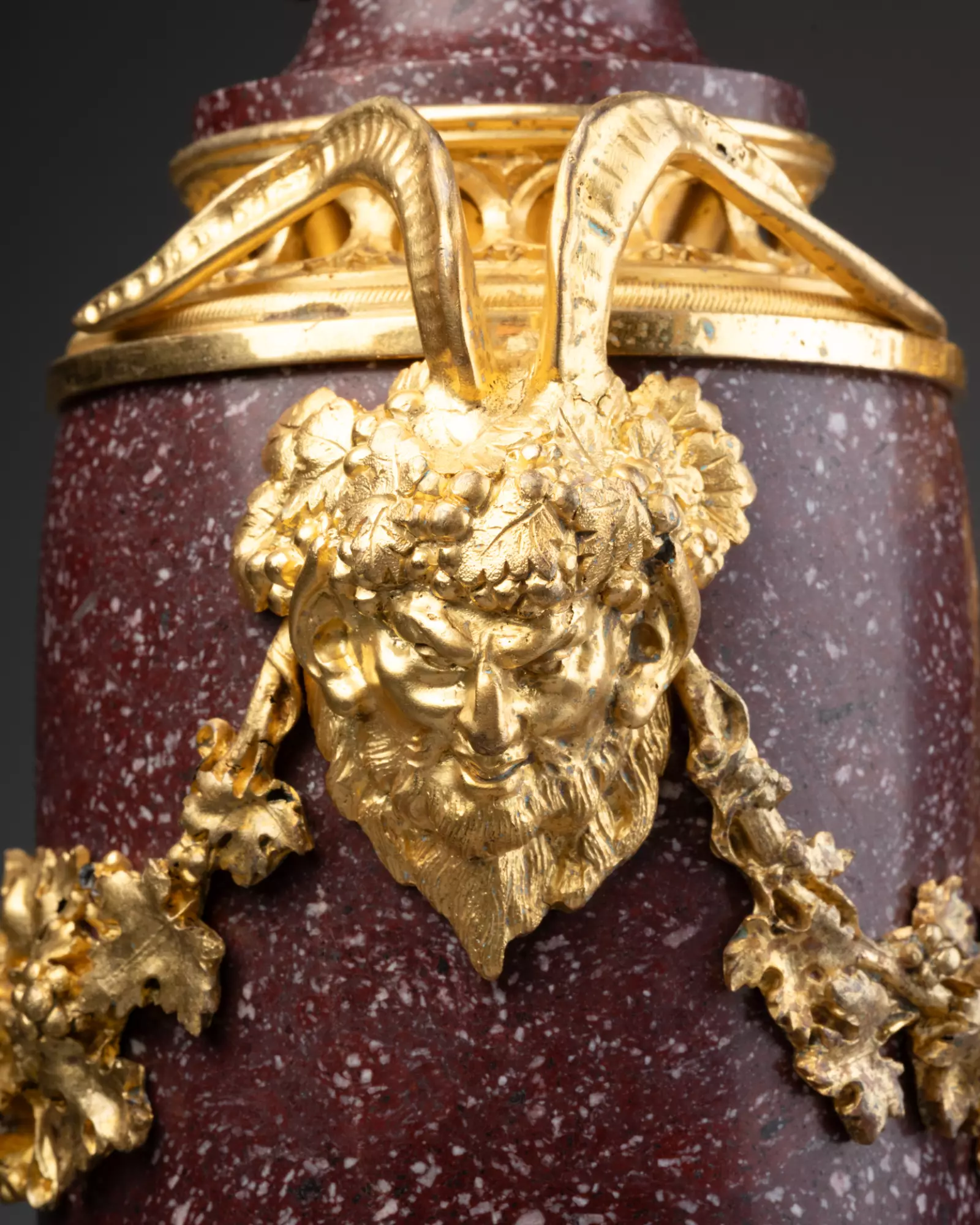
The ovoid bodies are adorned with two lateral mascarons decorated with faun heads linked by garlands of vine leaves and bunches of grapes.
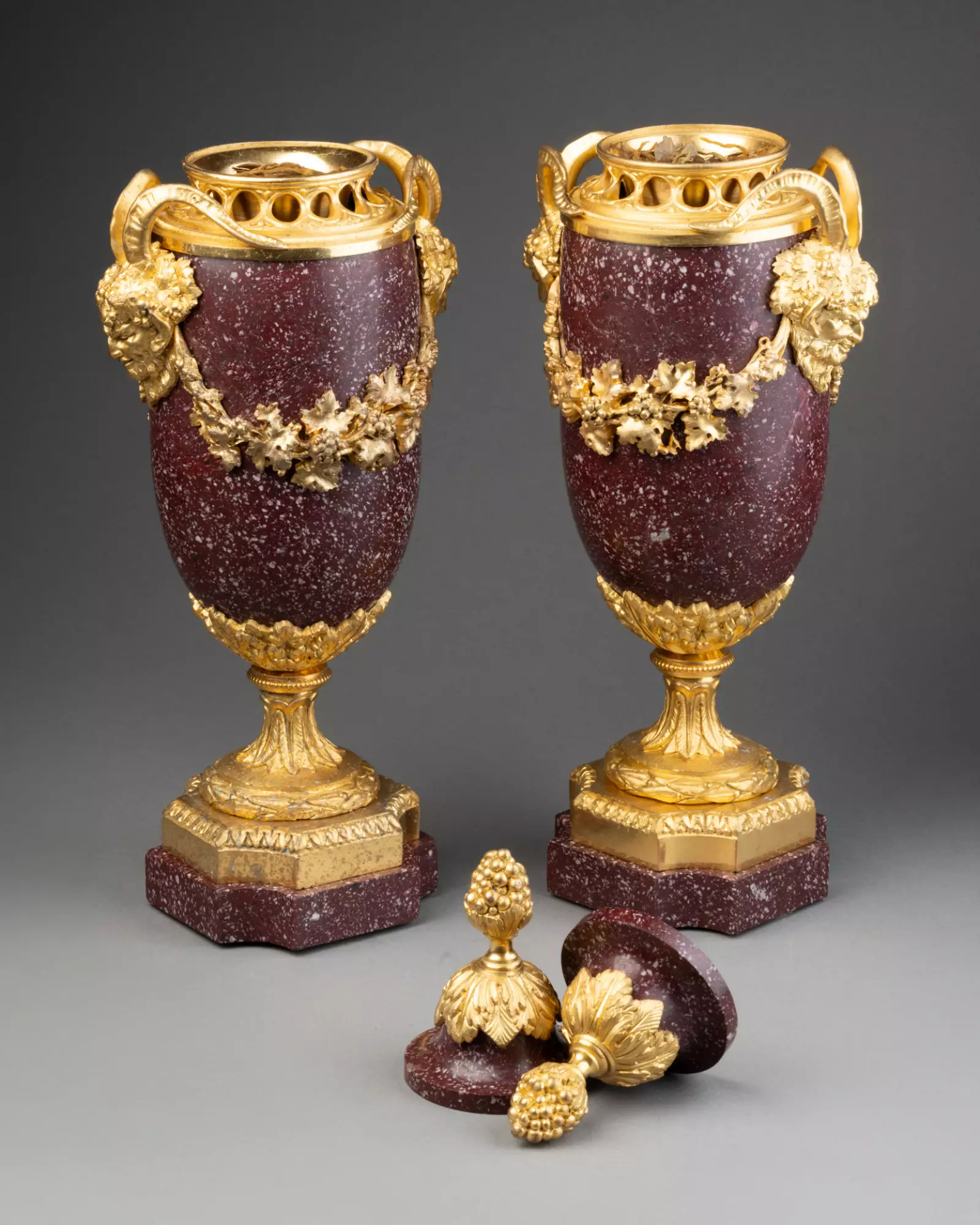
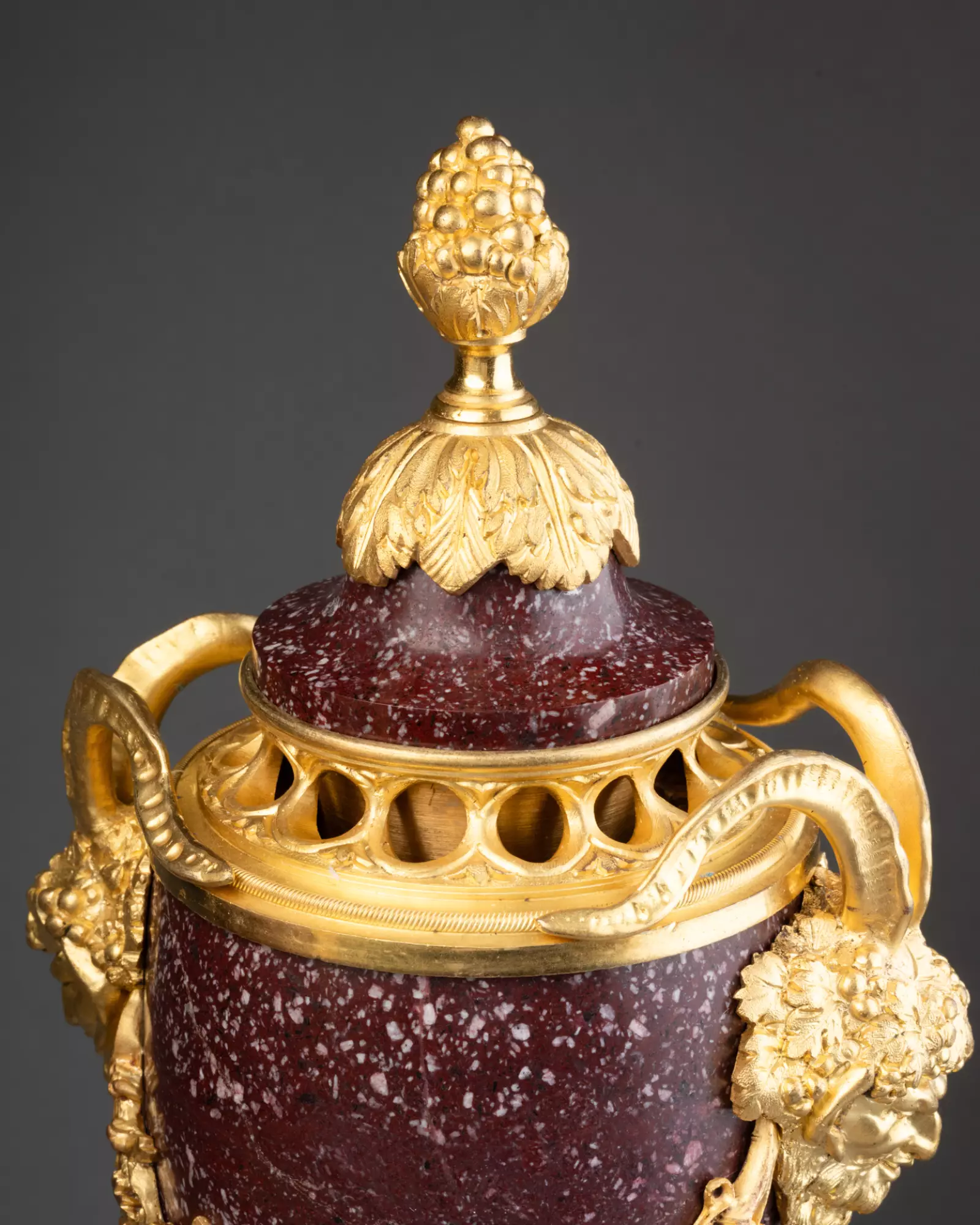
The rim of each body is encircled by a double bronze band, finely pierced with a circular frieze.
Above, small porphyry domes, each ending in a handle shaped like a seed pod, serve as stoppers. The interiors of the porphyry bodies are hollowed out and lined with small compartments of gilded metal.
Very well preserved, original mercury gilding.
Roman work from the Neoclassical period, circa 1830-1840.
Dimensions:
Height: 33 cm
Our opinion:
The epitome of Neoclassical refinement, the incense burner became fashionable with the rediscovery of great ancient sites such as Pompeii and Herculaneum, whose Roman villas are decorated with frescoes or depictions of Vestal Virgins tending the sacred fire with a pinch of incense.
To imitate this idealized antiquity, exquisite incense burners were crafted in bronze, marble, or even hard stone.
Our example is made of purple porphyry from Egypt, the legendary stone of the pharaohs, exported by the Romans and intended solely for the imperial cult. Those who believed this stone to be the fossilized blood of the gods brought back vast quantities to Rome, to the point of depleting the Egyptian quarries.
From the end of antiquity onward, this precious material was sought after for reuse by the finest artisans.
Over the centuries and through repeated use, the size of the objects decreased considerably, from monumental columns to smaller sculptures, then to small objects, and finally to tiny mosaics, making the material's scarcity inevitable.
While porphyry was always highly prized due to the grandiose memory of the Roman Empire, it experienced a resurgence of interest at the beginning of the 19th century with the rediscovery of ancient Egypt by Napoleon's troops.
The rise of the French Empire and its expansion across the European continent led to a growing demand for this material, which symbolized imperial power. New quarries will be discovered and exploited in Sweden, but the Egyptian variety, with its purple color and mythical history, will always remain the most sought-after. Our potpourri pieces, which combine the expertise of a master lapidary and a master bronze worker, perfectly represent this luxurious production.