Galerie Franck Baptiste
7 quai Voltaire
75007 Paris
FRANCE
Tél. +33 (0)6 45 88 53 58
Monday to Saturday
10h - 13h & 14h - 18h30
- FR
- EN

Works of Art
18th century
1
Works of Art du 18th century
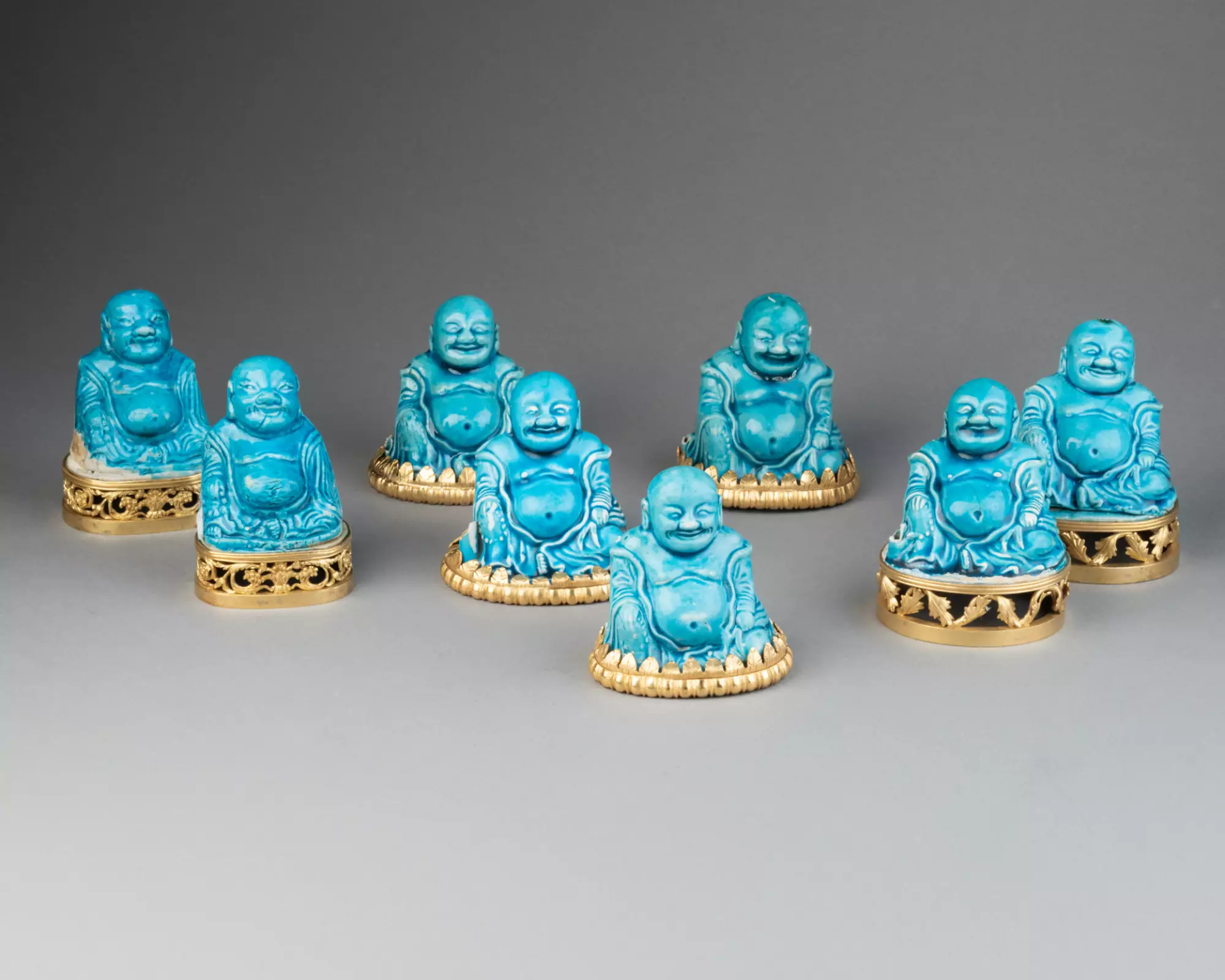
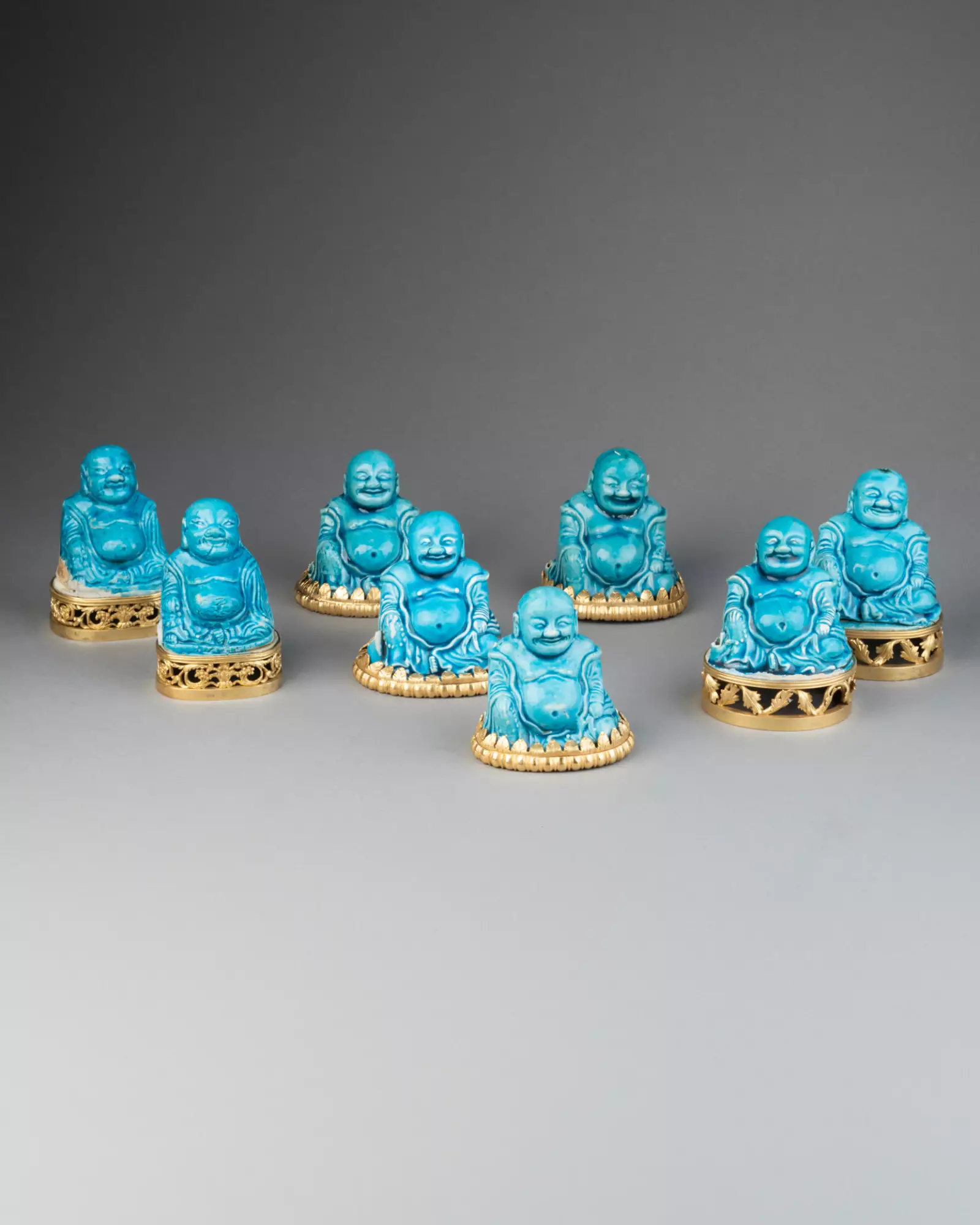
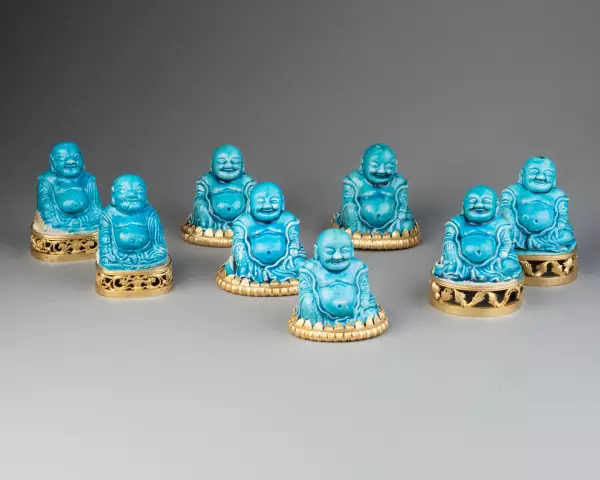
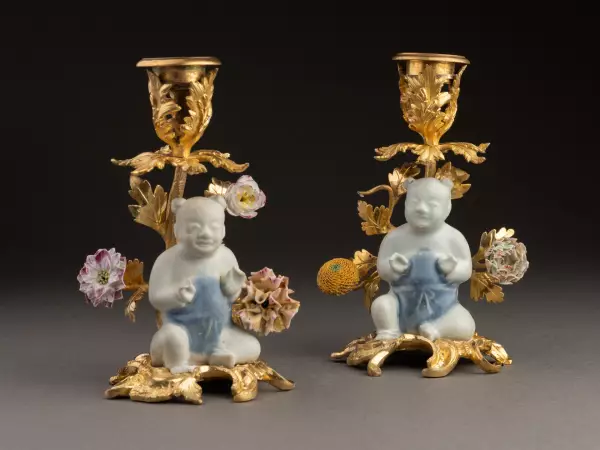
Collection of eight turquoise-glazed biscuit porcelain figures of Budai, China, 18th
DIMENSIONS : l. 3.15 .inH. 3.15 .in
MATERIAUX : Porcelain
PROVENANCE : China
PRICE : Contact us
REQUEST INFORMATION
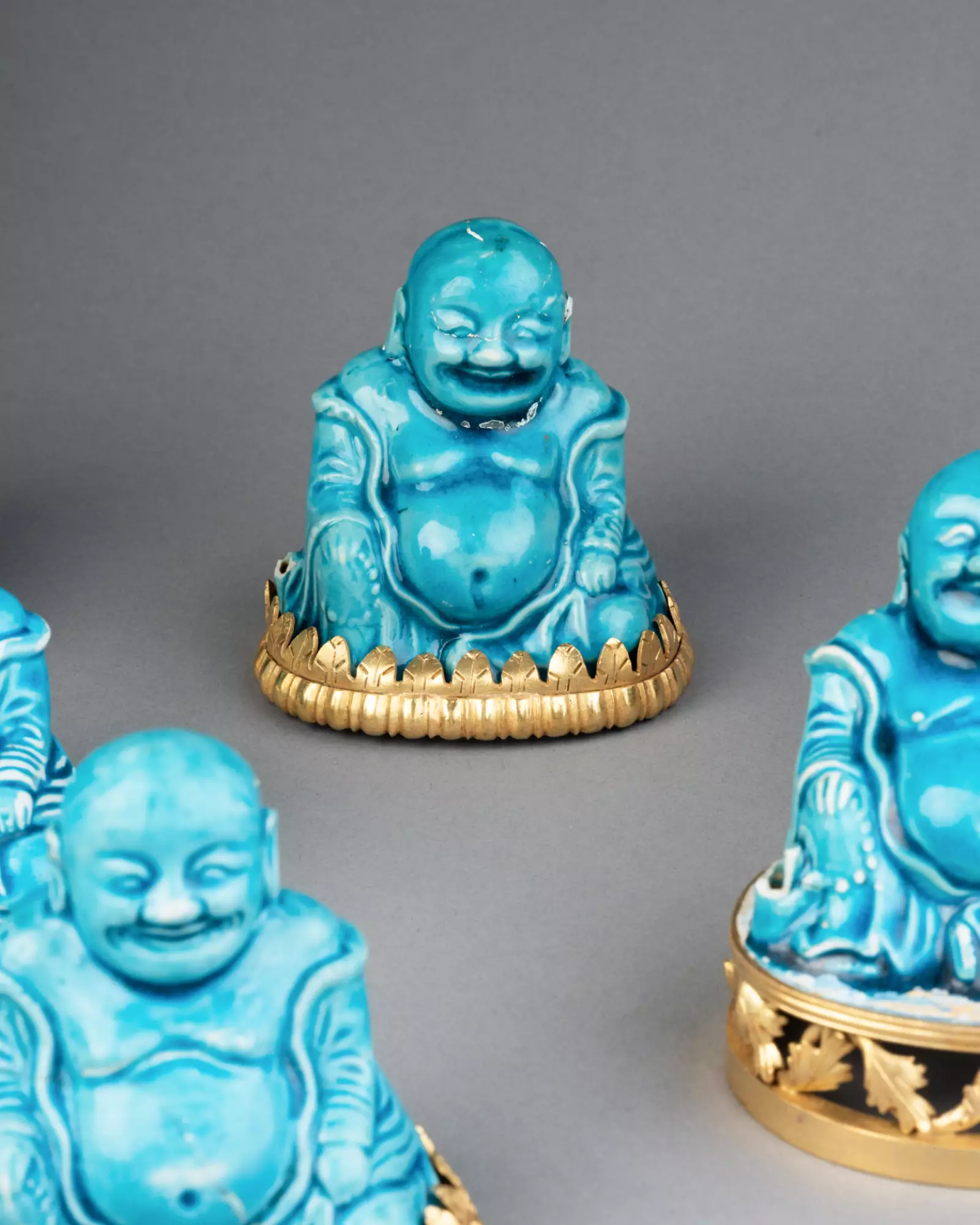
?A rare collection of eight pen holders made of turquoise-glazed biscuit porcelain.
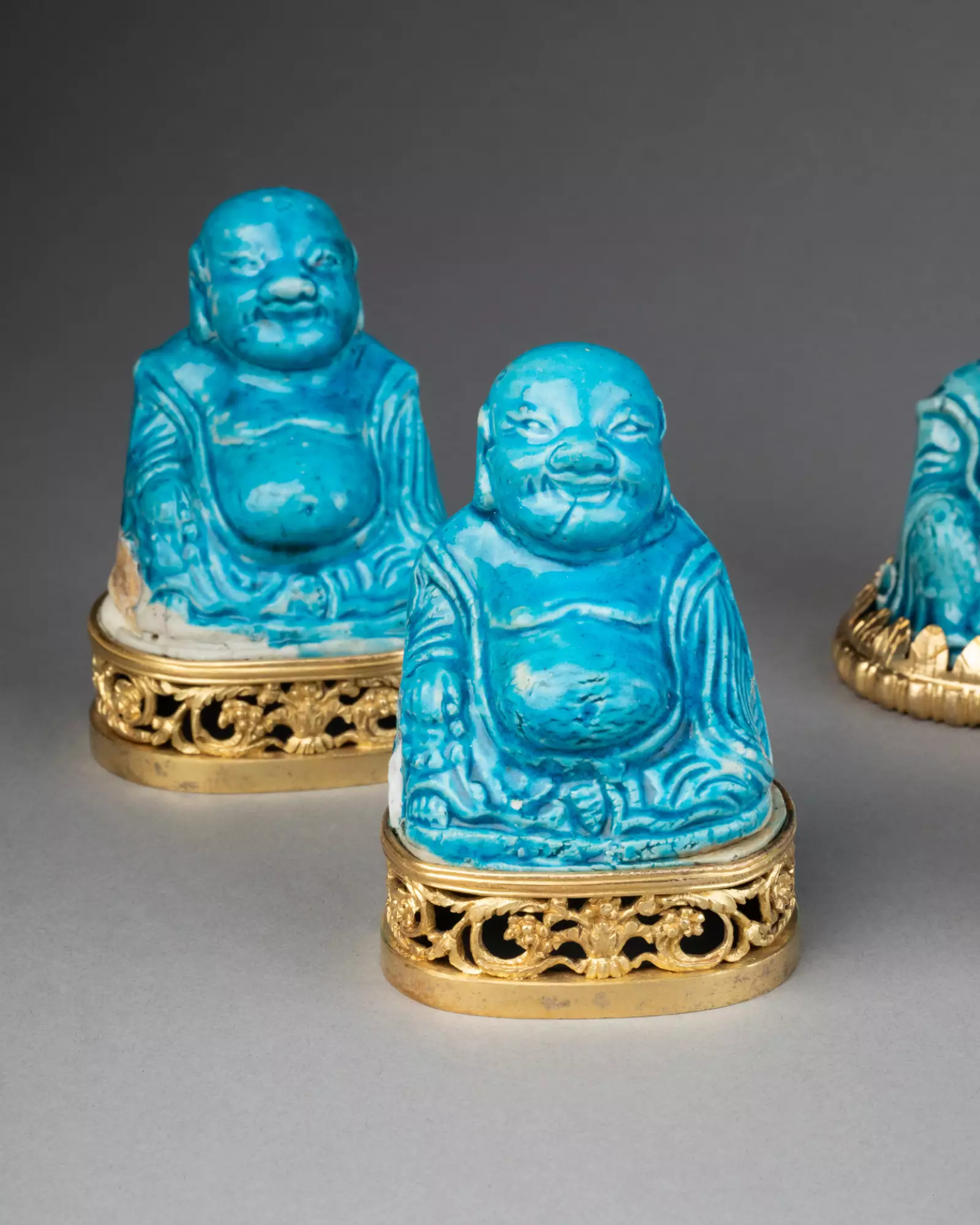
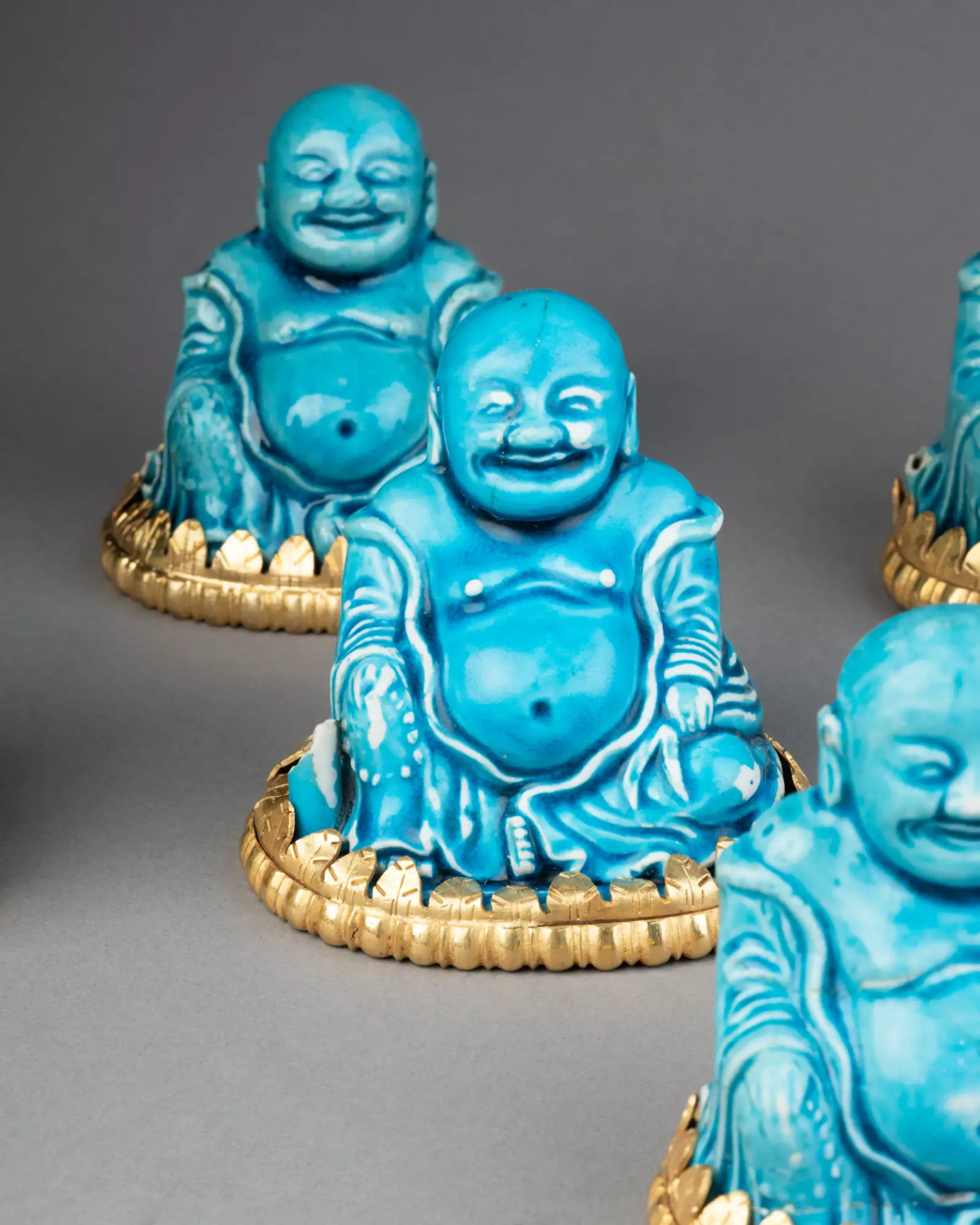
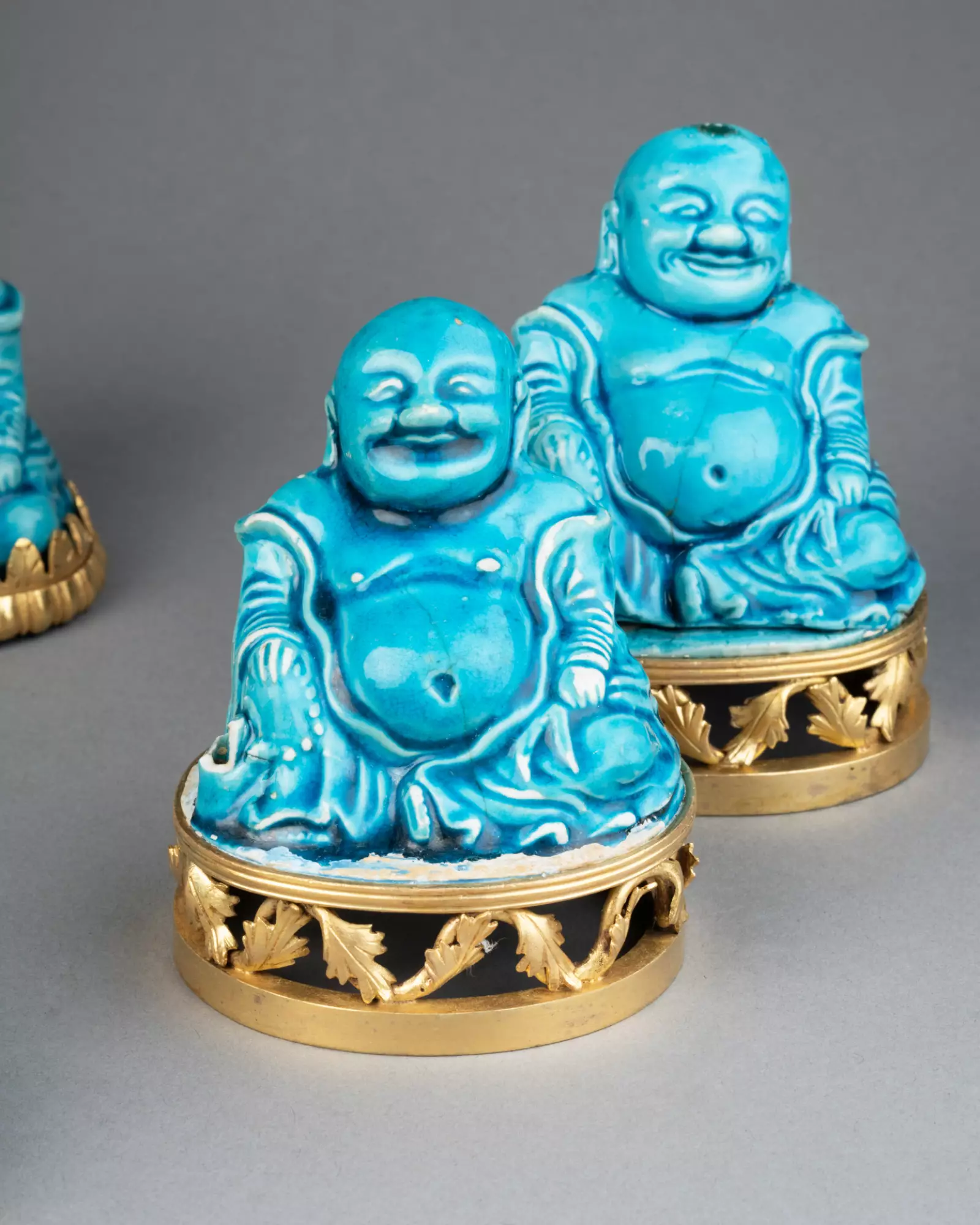
The figures depict Budai—a popular Chinese deity associated with happiness, abundance, and prosperity—seated with his belly exposed and wearing his characteristic smile.
They are crafted from biscuit porcelain and covered in a remarkable, deep turquoise glaze.
These pieces originated from the kilns of Jingdezhen, China, and date to the reign of the Kangxi Emperor (1661–1722).
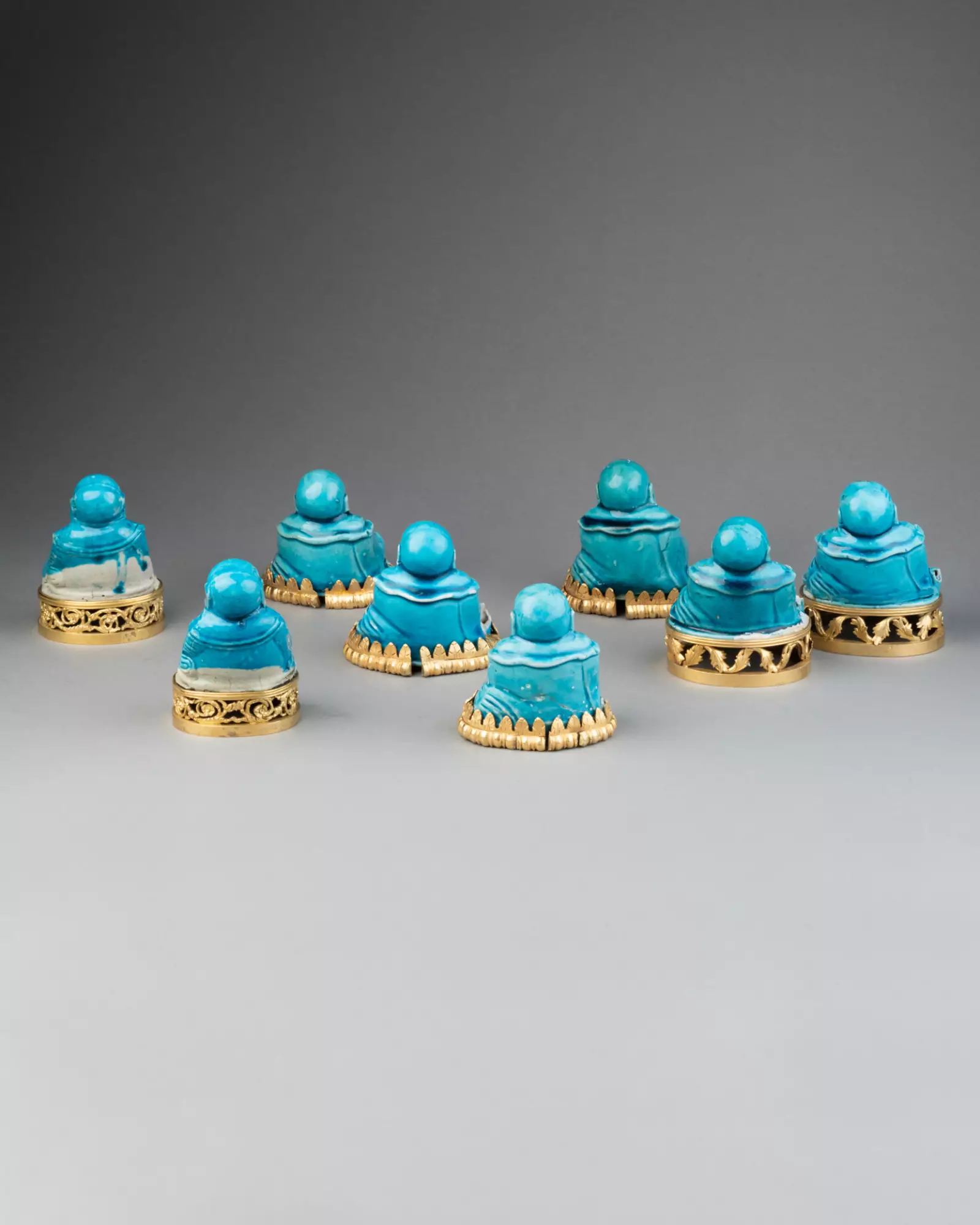
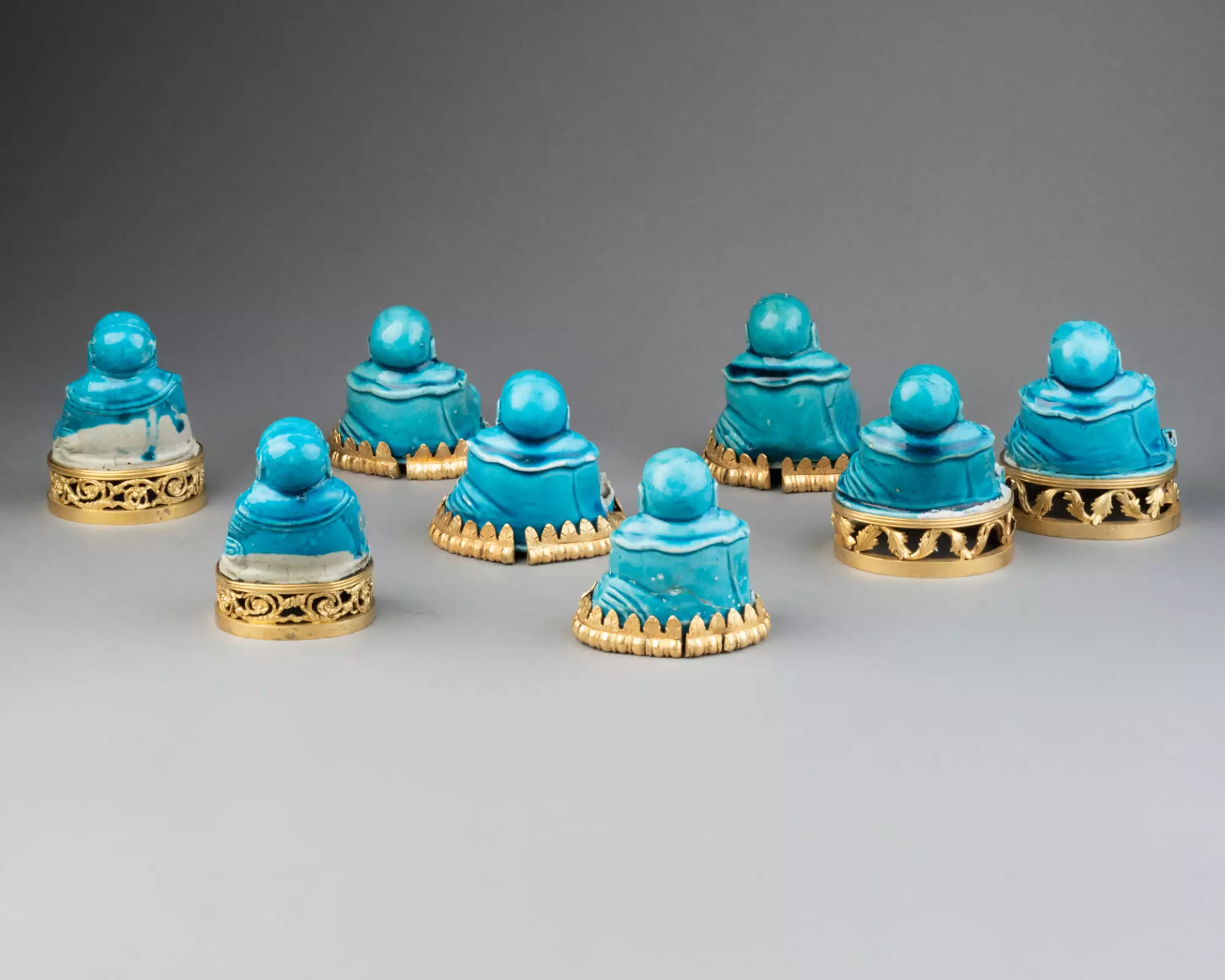
During the 18th and 19th centuries, they were fitted with elegant mercury-gilt bronze mounts. Two bases featuring openwork friezes and particularly refined designs appear to date from the Louis XVI period, while the other mounts belong to the mid-19th century.
Good condition; minor losses and restorations to the ceramic.
Dimensions:
Height: 7 to 8.5 cm
Width: 6.5 to 8 cm
Our assessment:
Originally intended as pen holders for scholars' desks, these small sculptures reflect the Chinese elite's appreciation for cabinet objects that combined utility with symbolic significance.
The quality of the porcelain body, the fine modeling, and the rich glaze allow this set to be attributed to the imperial kilns of Jingdezhen during the reign of the Kangxi Emperor (1662–1722).
From the 18th century onwards, these Budai figures were highly sought after by European collectors. Imported from China via prominent Parisian *marchands-merciers* (luxury goods dealers), they graced the most prestigious private collections. Their exotic appeal, exquisite craftsmanship, and brilliant glazes perfectly suited the burgeoning taste for *chinoiserie*. To further enhance their value, they were frequently fitted with gilt-bronze mounts or bases crafted by the finest Parisian bronziers, transforming these scholars' objects into true works of art destined for aristocratic homes.
The grouping of eight pieces preserved together constitutes a truly exceptional set. These Kangxi-period porcelain brush holders are rare enough when they appear individually on the market; finding a matching pair is uncommon, and seeing such a significant collection remain intact is even more exceptional. The presence of several period mounts—some dating back to the late 18th century—further heightens the historical significance of the set. This rarity makes the collection particularly remarkable for connoisseurs of antique Chinese porcelain and mounted objects reflecting the taste for the Far East.