Galerie Franck Baptiste
7 quai Voltaire
75007 Paris
FRANCE
Tél. +33 (0)6 45 88 53 58
Monday to Saturday
10h - 13h & 14h - 18h30
- FR
- EN

Works of Art
19th century
1
Works of Art du 19th century
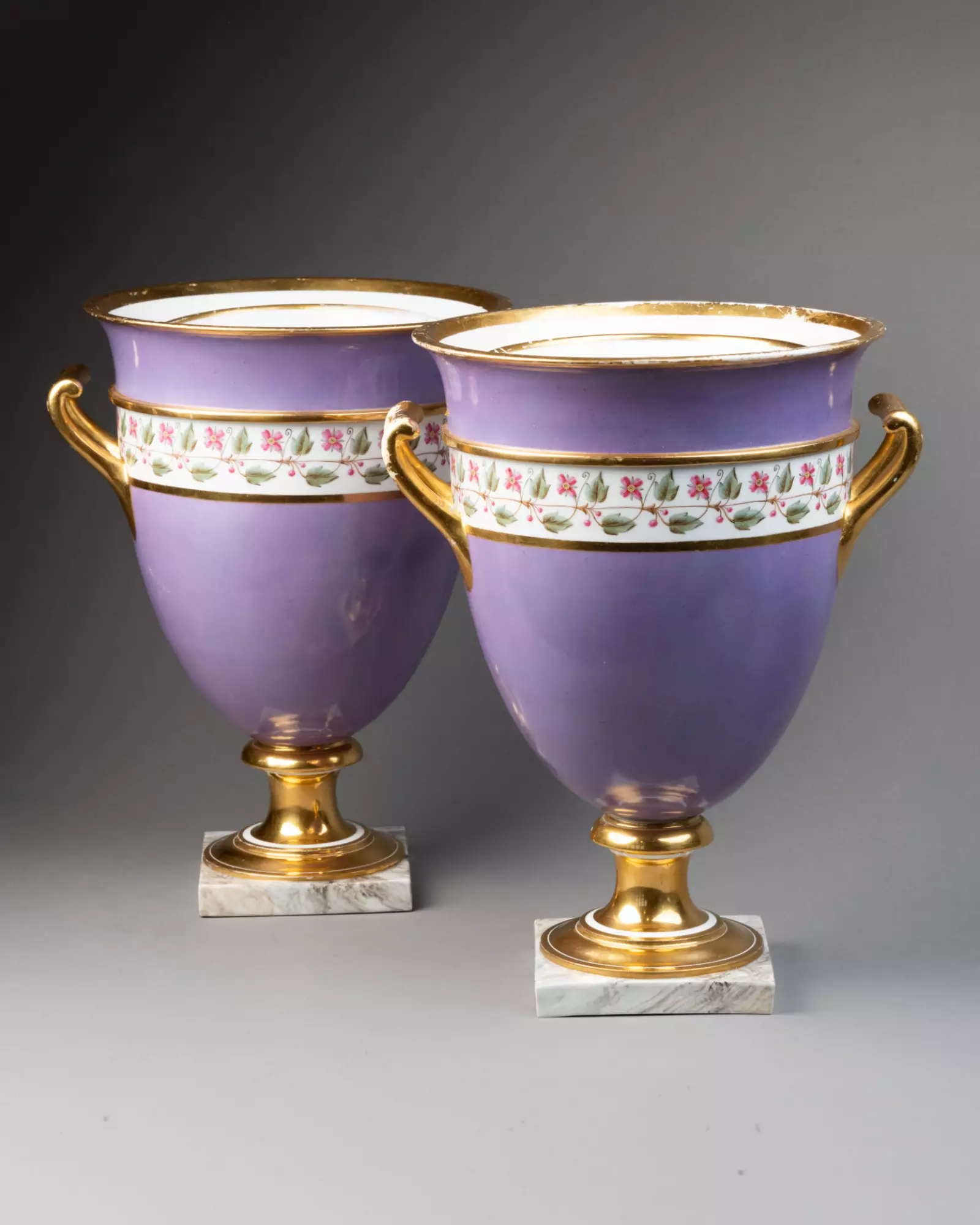
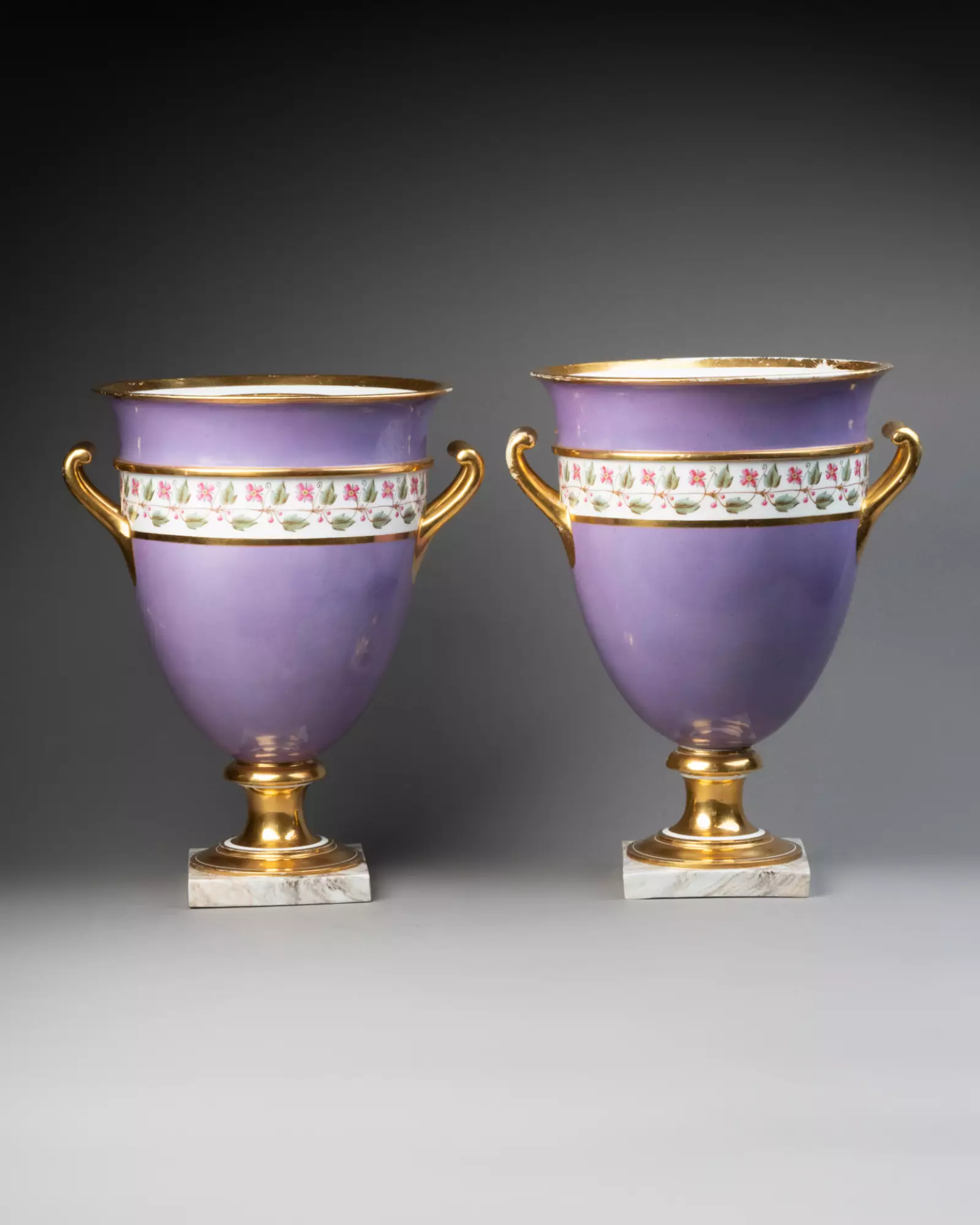
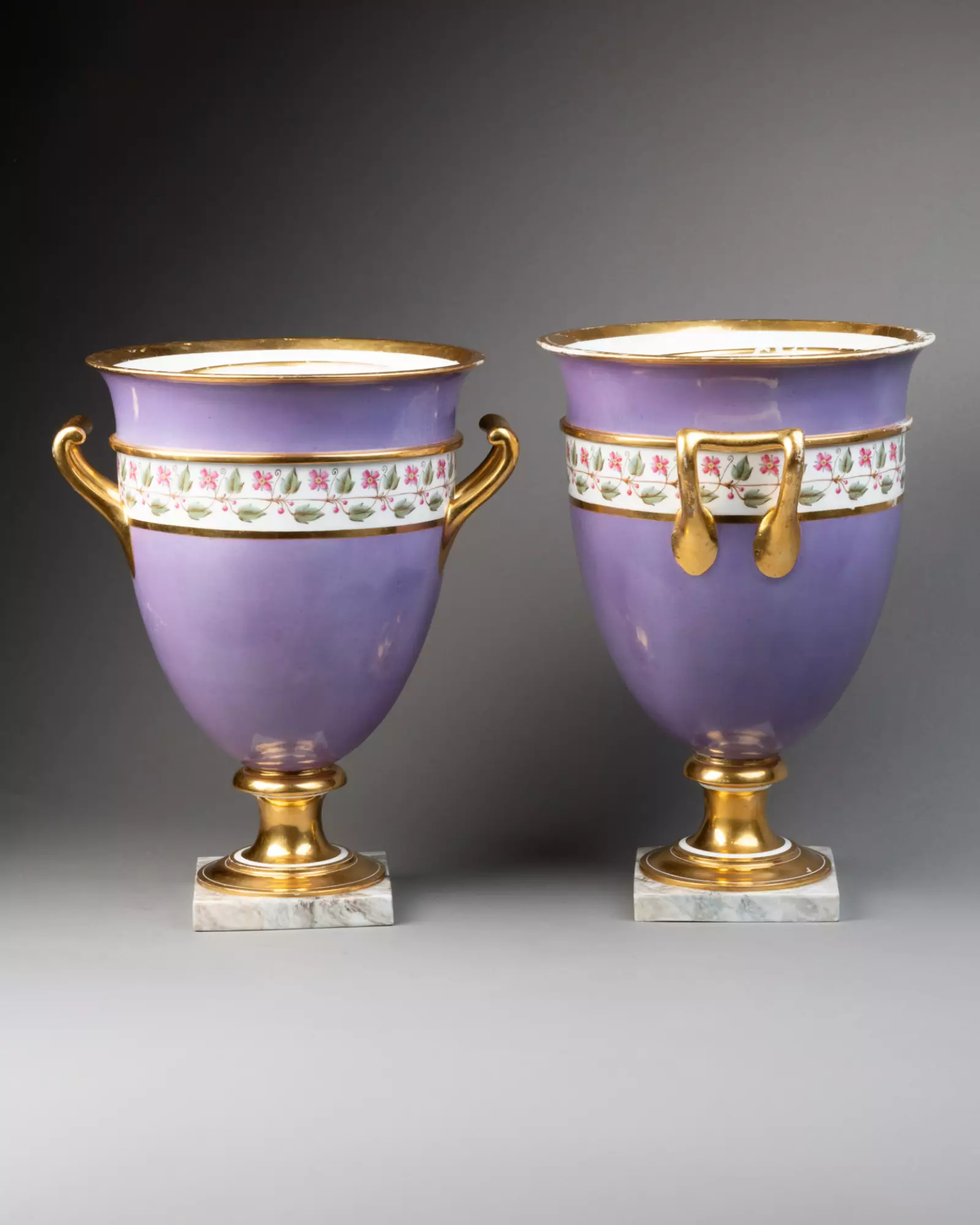
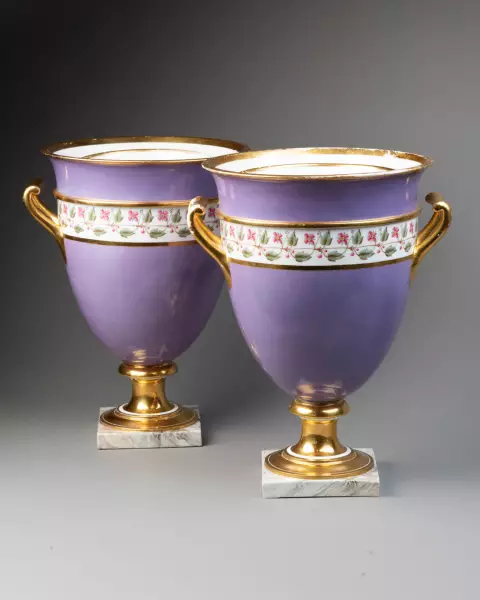
97 Pair of Sèvres porcelain iceboxes delivered by Napoleon to the imperial palace of Bordeaux in 1808
DIMENSIONS : H. 12.99 .inØ 9.84 .in
MATERIAUX : Sévres porcelain
PRICE : Contact us
REQUEST INFORMATION
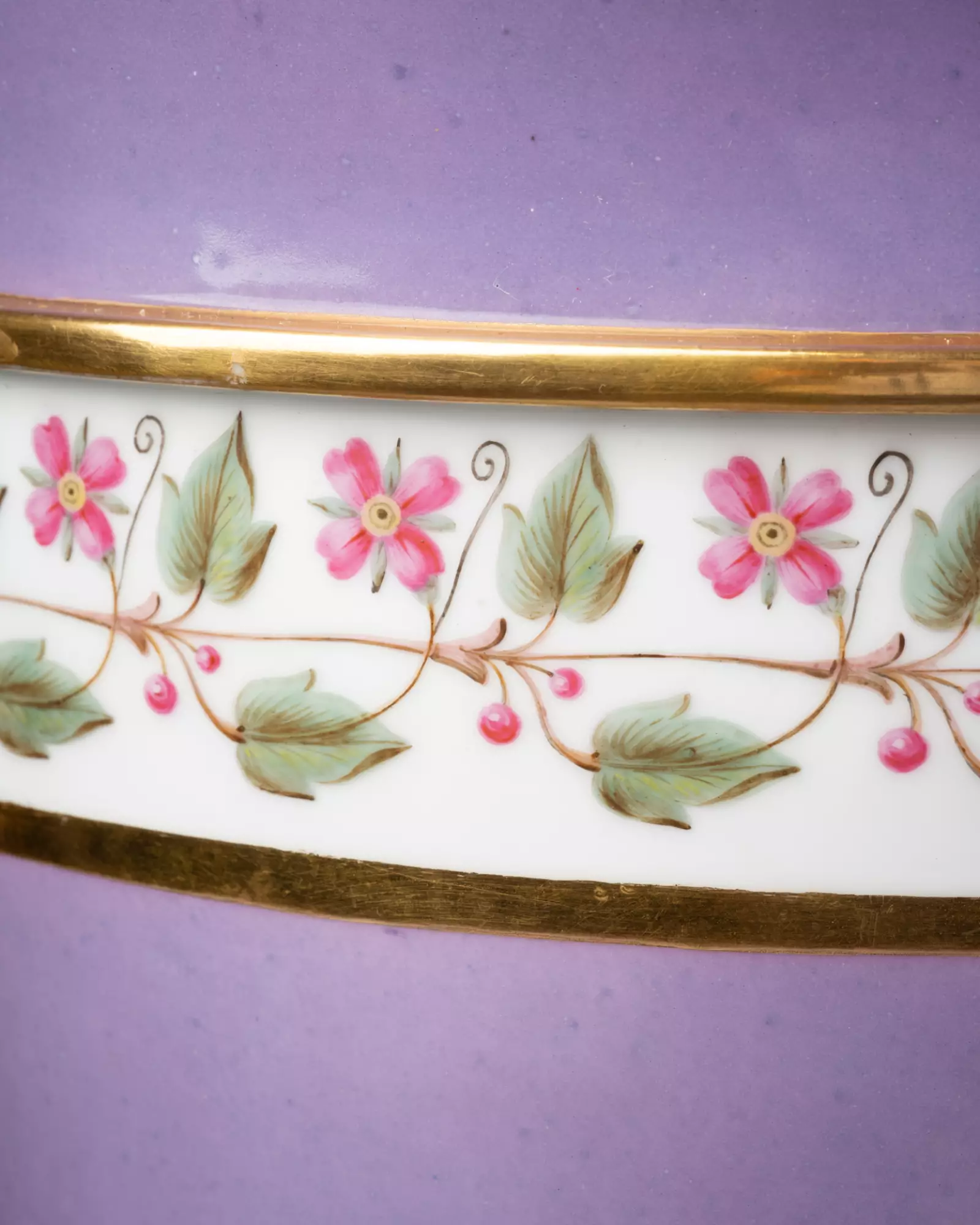
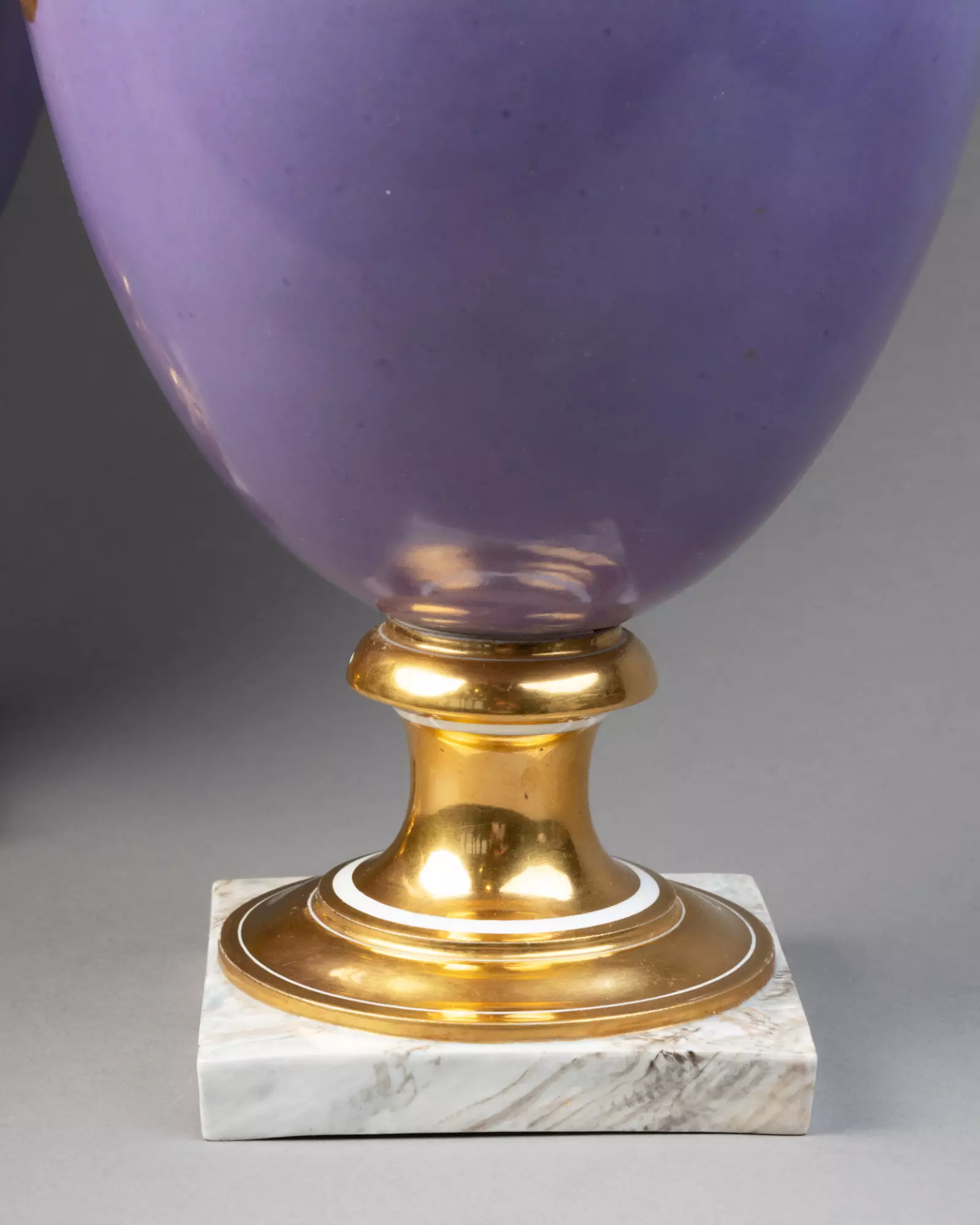
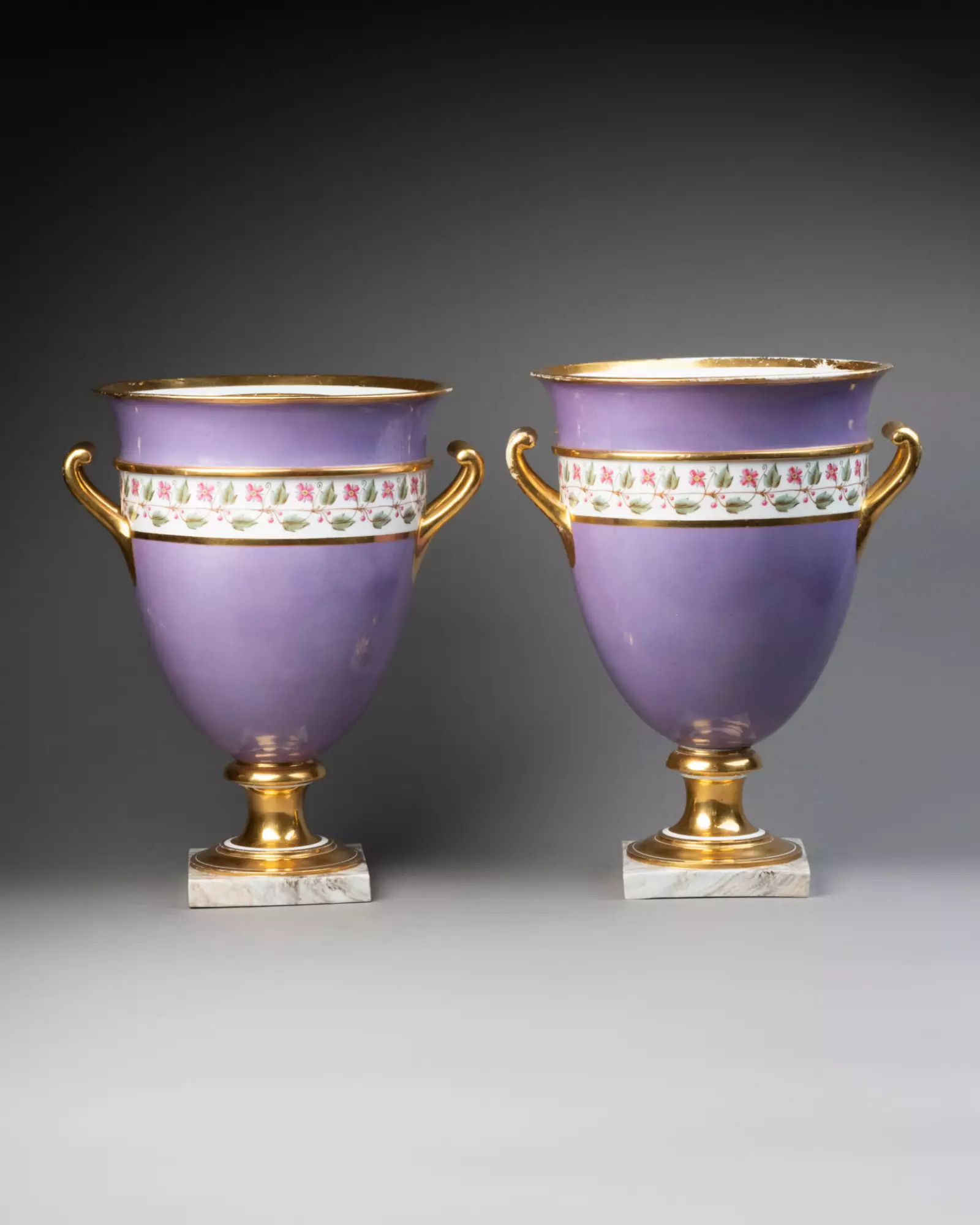
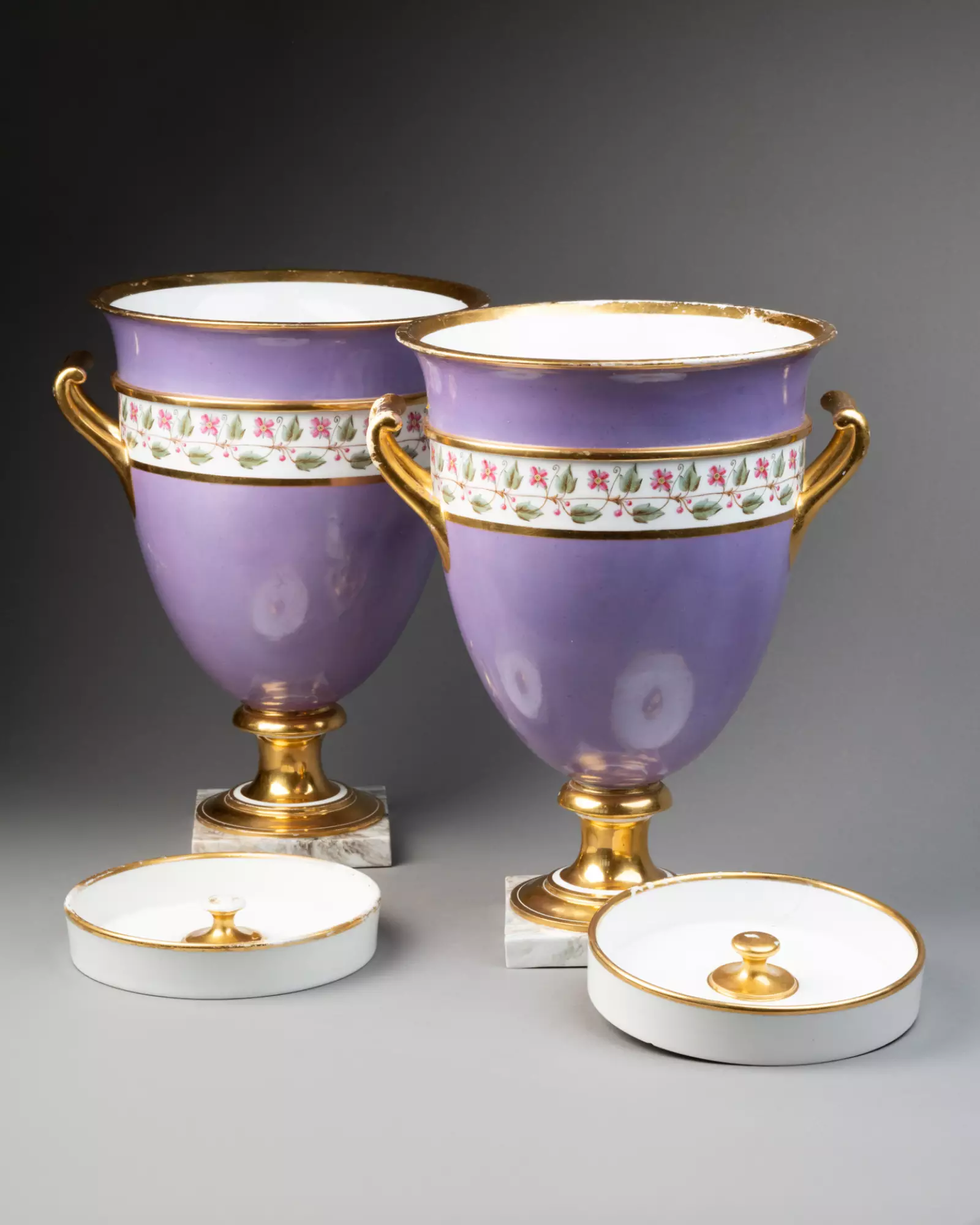
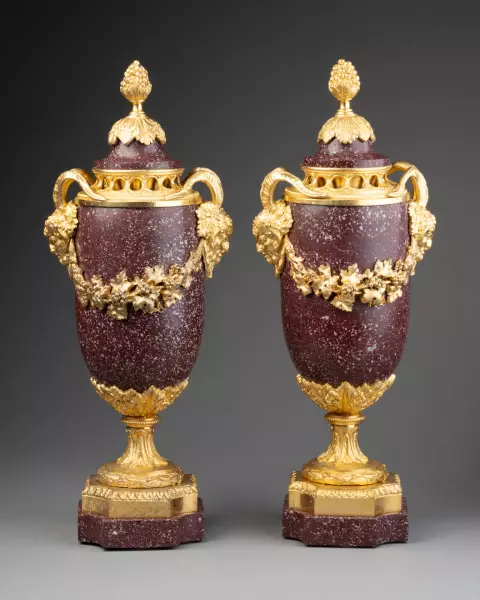
?Etruscan in form, each icebox consists of an inverted bell-shaped container resting on a gilt pedestal, itself placed on a rectangular base imitating marble.
The main body is framed by two gilt side handles.
The two interior stoppers are made of white porcelain enhanced with gold trim.
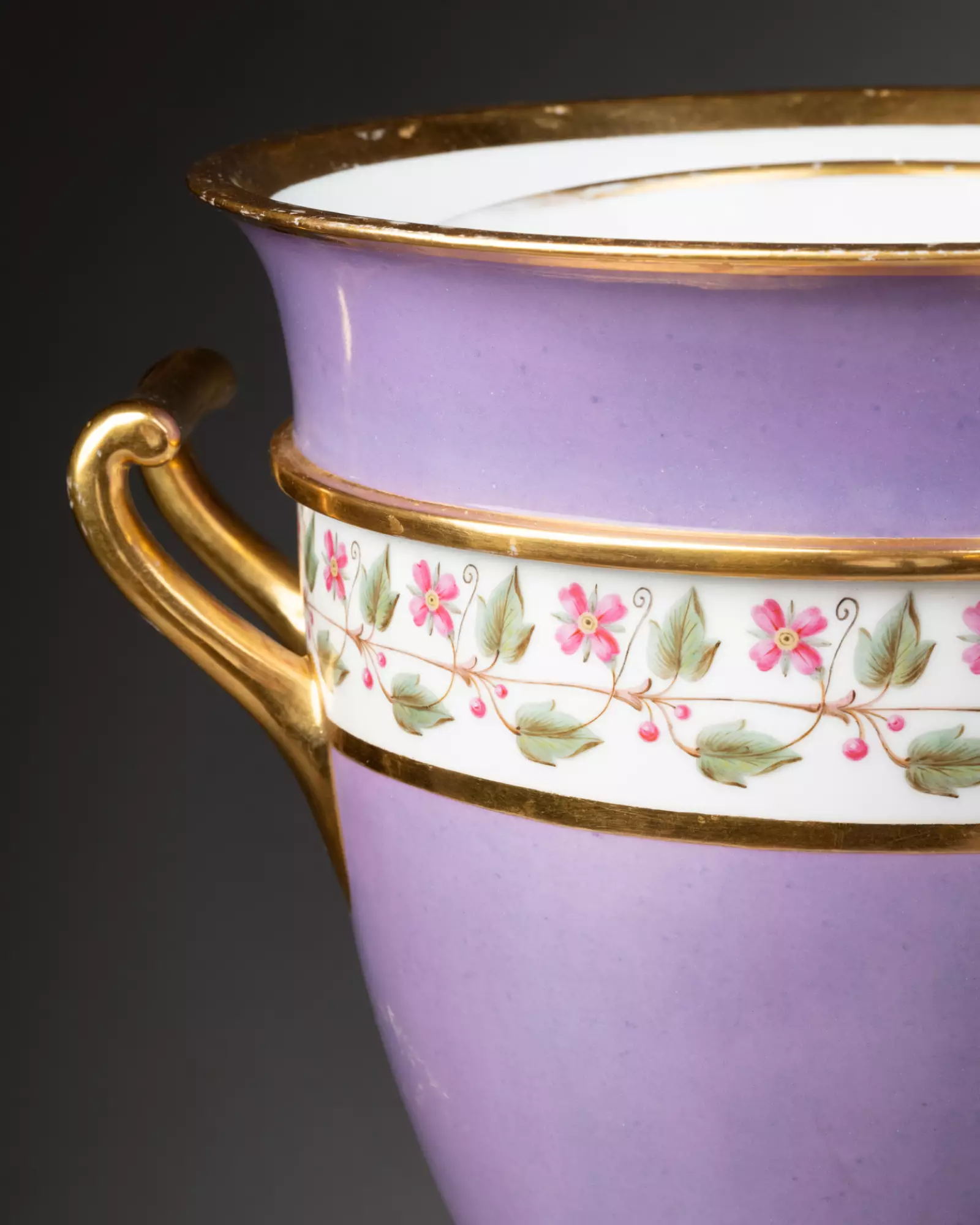
The particularly refined decoration is described in the Sèvres Manufactory archives as "a purple ground with friezes of colored anemones."
The mark "B" in red is on the reverse; probably for Marie-Jeanne Barbe Bunel, a painter active at the manufactory between 1775 and 1817.
As was very often the case with pieces from the Empire period, the Sèvres mark, including the word "Imperial," was certainly erased during the Restoration, when the monarchy was restored.
In good condition, with wear to the gilding and a crack on an inner stopper.
Imperial Sèvres Manufactory, Empire period, circa 1807-1808, delivered on June 25, 1808, for the personal service of Napoleon I and Josephine at the Imperial Palace in Bordeaux.
Dimensions:
Height: 33 cm; Width: 25 cm
A compote dish and a bottle bucket from this service are held at the Château de Fontainebleau.
One plate was sold at auction, Bonhams London, on October 27, 2021, lot 26.
A set of twelve plates was sold at auction in Fontainebleau, Osenat, on March 26, 2017, lot 191. They subsequently became part of the prestigious collection of Pierre-Jean Chalençon.
It is interesting to note that the Sèvres mark is also partially chipped on this set.
Bibliography:
Camille Leprince, “Napoleon I & the Sèvres Manufactory: The Art of Porcelain in the Service of the Empire,” Paris, 2016, p. 270, no. 113
Our opinion:
The pair of iceboxes we are presenting elegantly illustrates the Neoclassical taste still deeply marked, at the beginning of the 19th century, by a fascination with Antiquity. Their so-called “Etruscan” form, inspired by ancient vases rediscovered in the 18th century through the excavations of Herculaneum and Pompeii, testifies to this enduring presence of archaeological vocabulary in French decorative arts, from the end of Louis XVI’s reign to the early years of the Empire. The clean lines, stylized handles, and rigorous arrangement of the decoration perfectly reflect this pursuit of an ancient ideal, reinterpreted with refinement by the imperial manufactory.
These icehouses are also of major historical interest, as they were delivered on June 8, 1808, for the Emperor's use at the Imperial Palace in Bordeaux, formerly the Rohan Palace, which Napoleon had transformed into an imperial residence following his journey with Empress Josephine to Spain. The purpose of this trip was to consolidate French authority in the Iberian Peninsula and to establish Napoleonic power there permanently, in a particularly tense political climate. After their stay in Bordeaux and Bayonne, where several crucial diplomatic meetings took place prior to the French intervention in Spain, the Emperor ordered the refurnishing and embellishment of the palaces intended to house the imperial court during its travels.
But beyond their historical significance, these icehouses possess a more intimate and almost personal dimension. While many imperial dinner services often display a more solemn, martial, or masculine character, exalting the emblems of Napoleonic power, this service stands out for its much softer and more refined decorative sensibility. The choice of the delicate lilac background, a particularly rare and expensive shade to achieve in porcelain, as well as the choice of highly feminine floral friezes, most likely reveal the Empress Josephine's own taste. We know how much she loved soft tones, refined floral designs, and delicate harmonies inspired by nature. This service thus appears as the expression of a more intimate world, allowing us to enter the very private sphere of the imperial couple and the everyday refinement that surrounded the lives of Napoleon and Josephine.