Galerie Franck Baptiste
7 quai Voltaire
75007 Paris
FRANCE
Tél. +33 (0)6 45 88 53 58
Monday to Saturday
10h - 13h & 14h - 18h30
- FR
- EN

Paintings
18th century
1
Paintings du 18th century
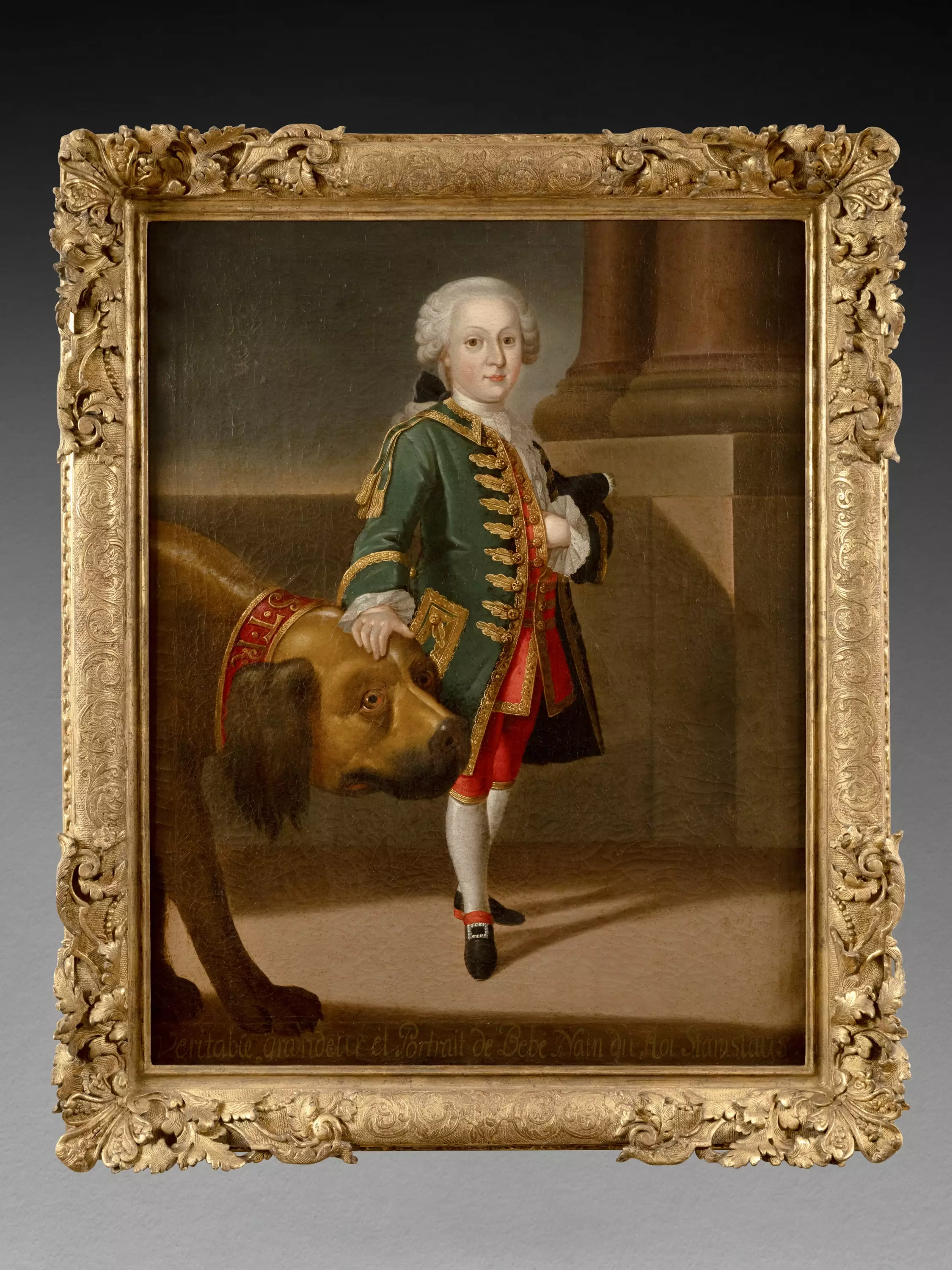
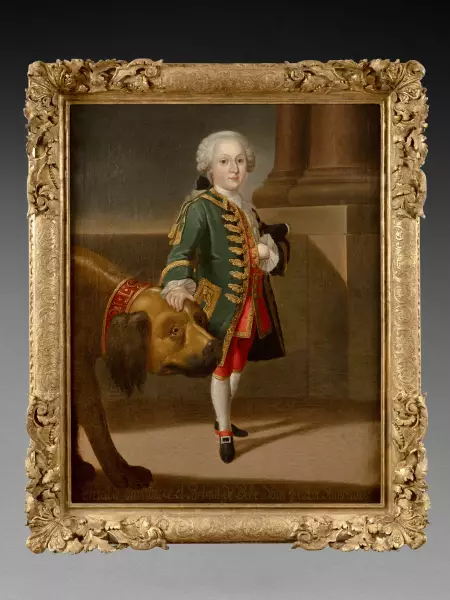
Portrait of the dwarf Nicolas Ferry, known as Bébé, ted to Jean Girardet
DIMENSIONS : l. 34.65 .inH. 41.34 .in
MATERIAUX : Huile sur toile
PROVENANCE : Lunéville, Lorraine
PRICE : Contact us
REQUEST INFORMATION
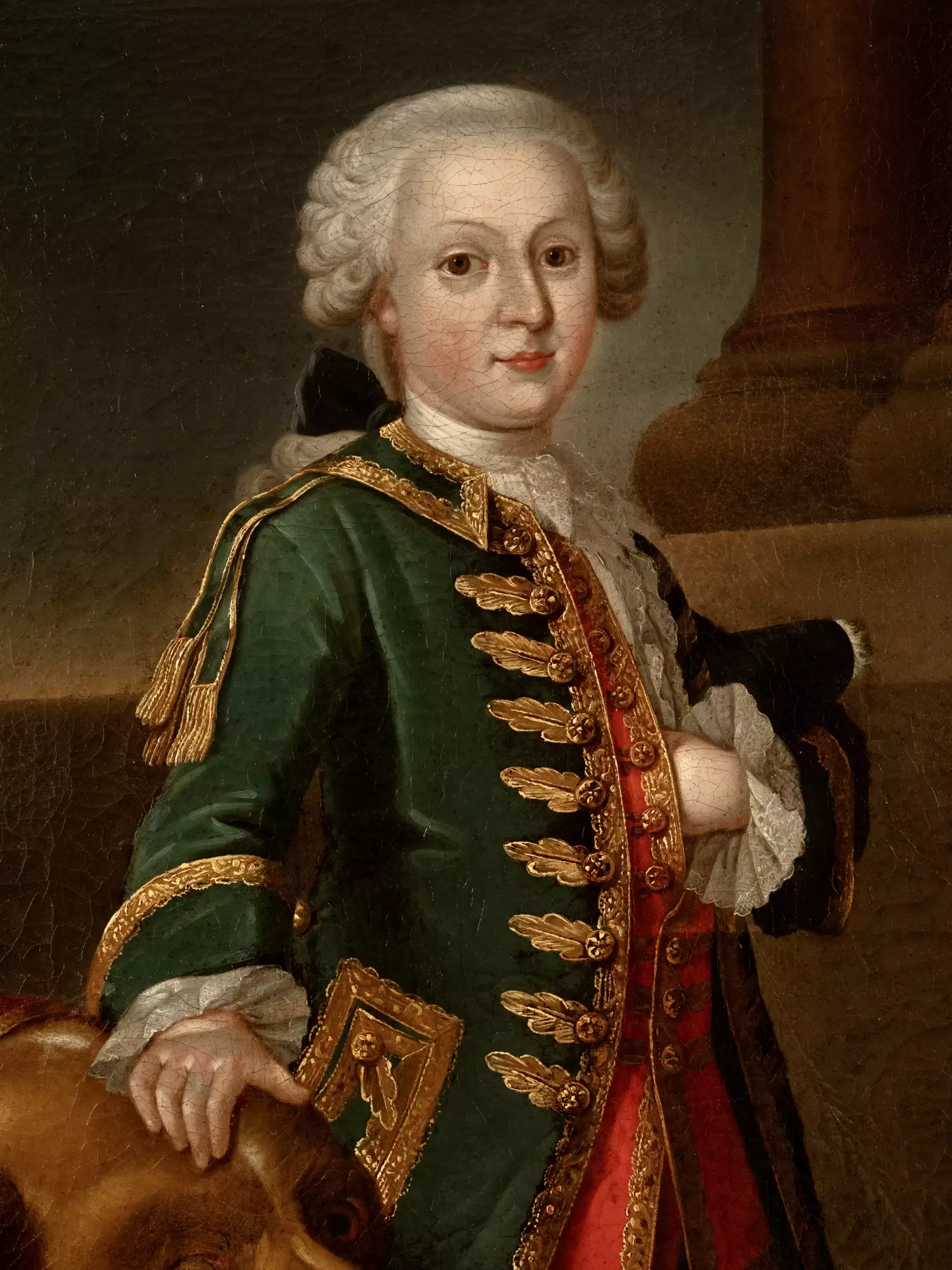
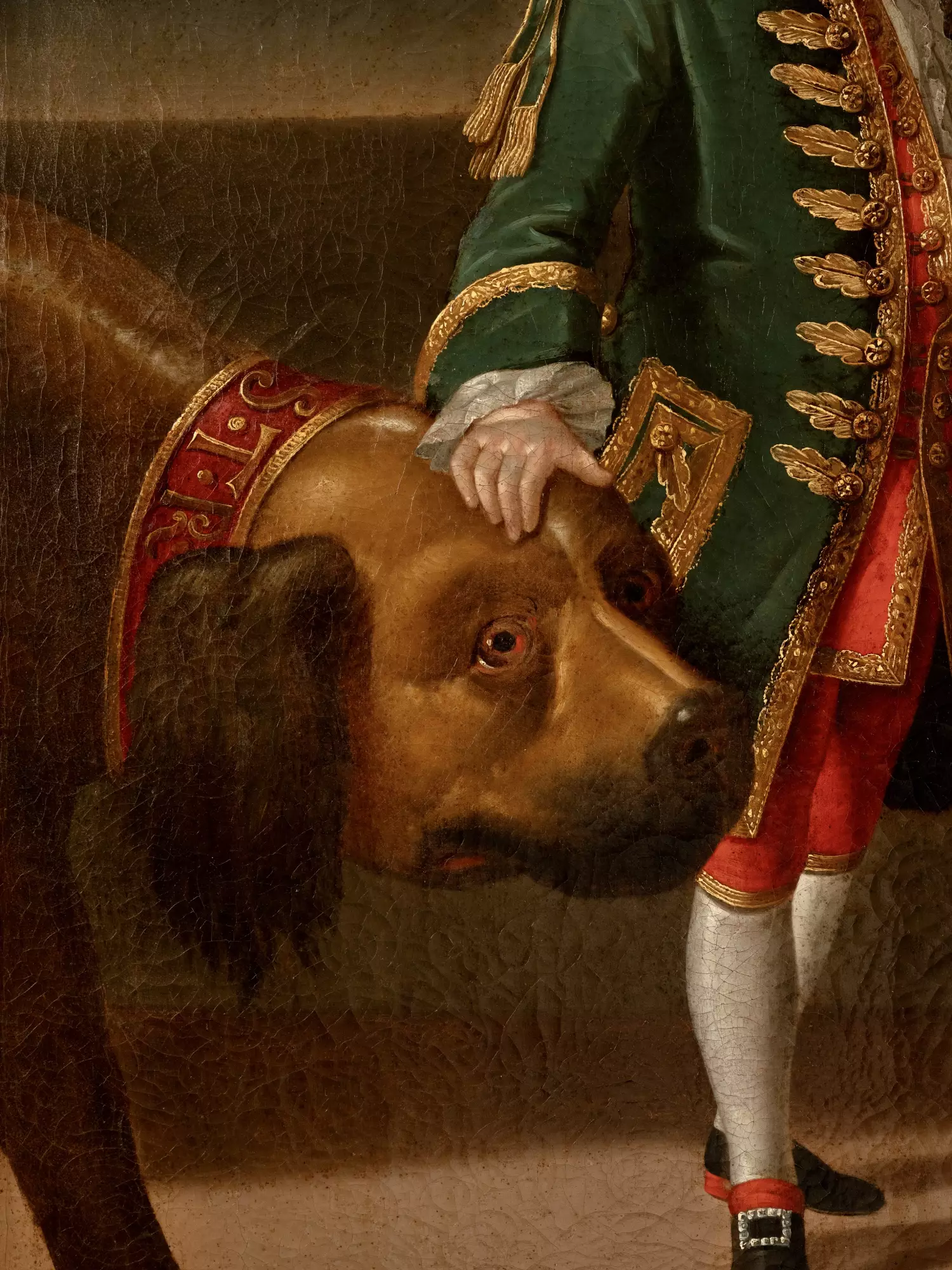
?Charming portrait depicting a rare subject: Nicolas Ferry, known as Bébé, a dwarf at the court of Lorraine, in military uniform.
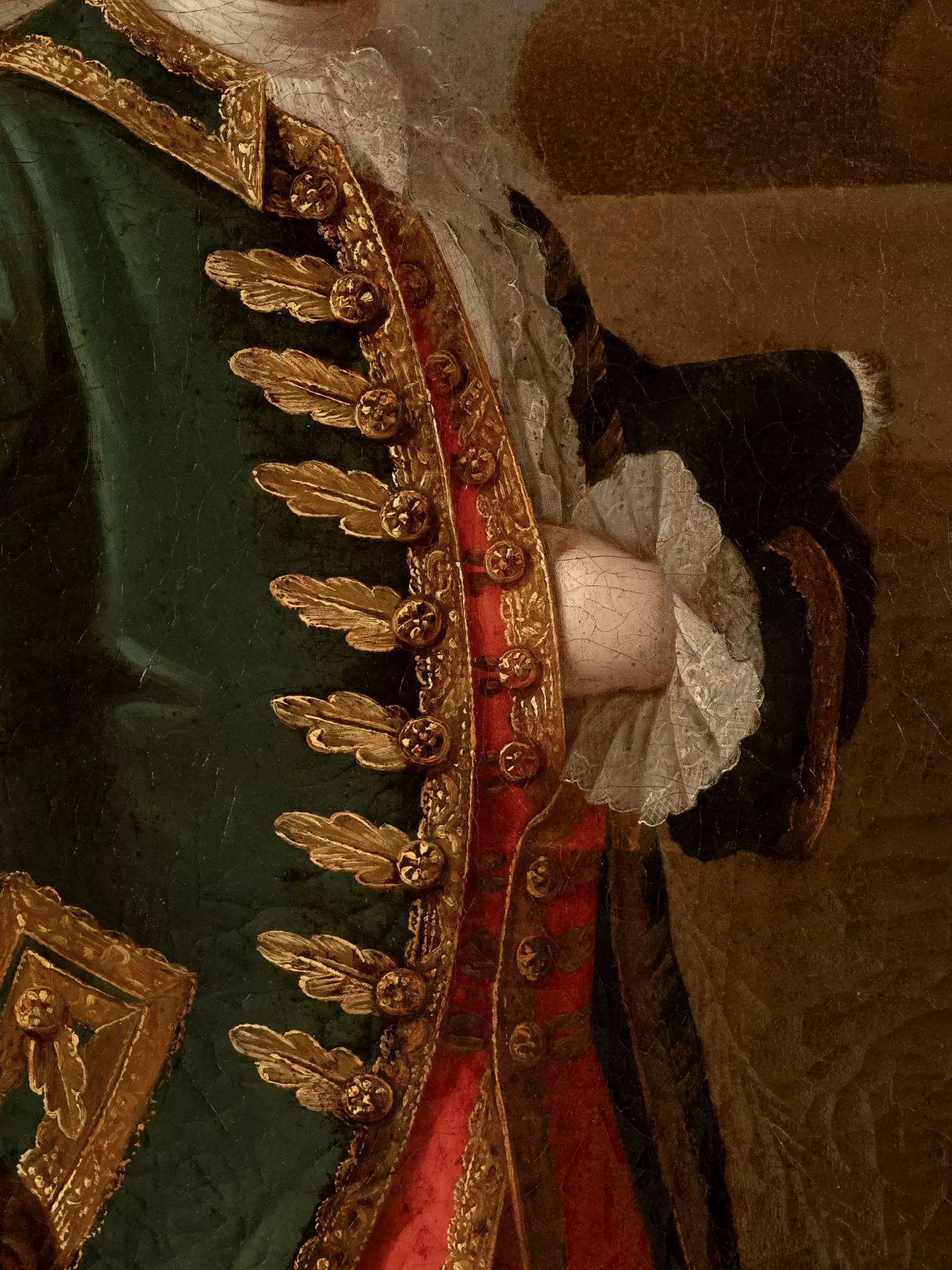
The young man stands in three-quarter view, gazing directly at the viewer, against an architectural backdrop that appears much larger than he is. His hair is powdered, his left hand is tucked into his coat, and his right hand rests on the head of a dog with a large red collar embroidered in gold.
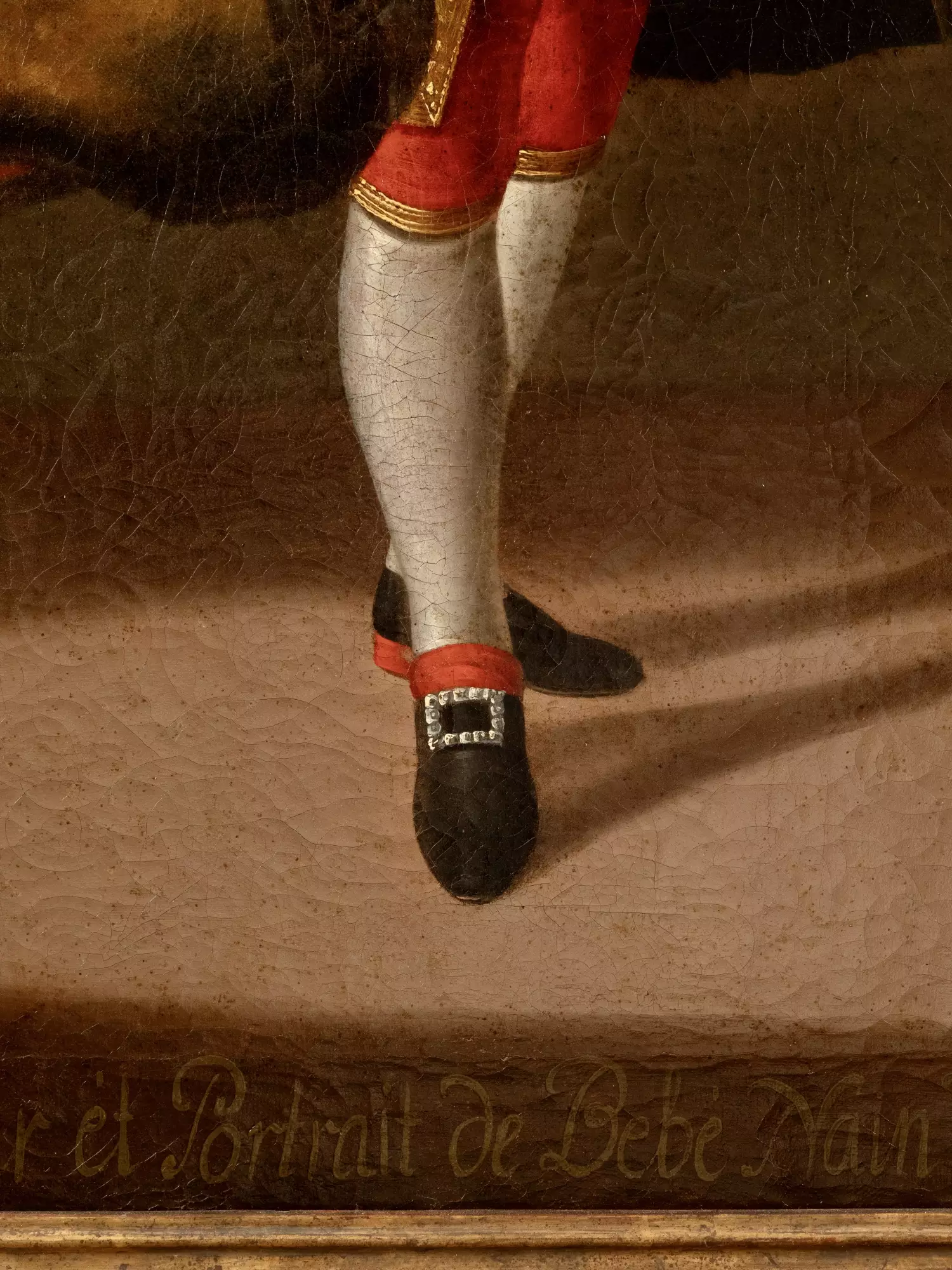
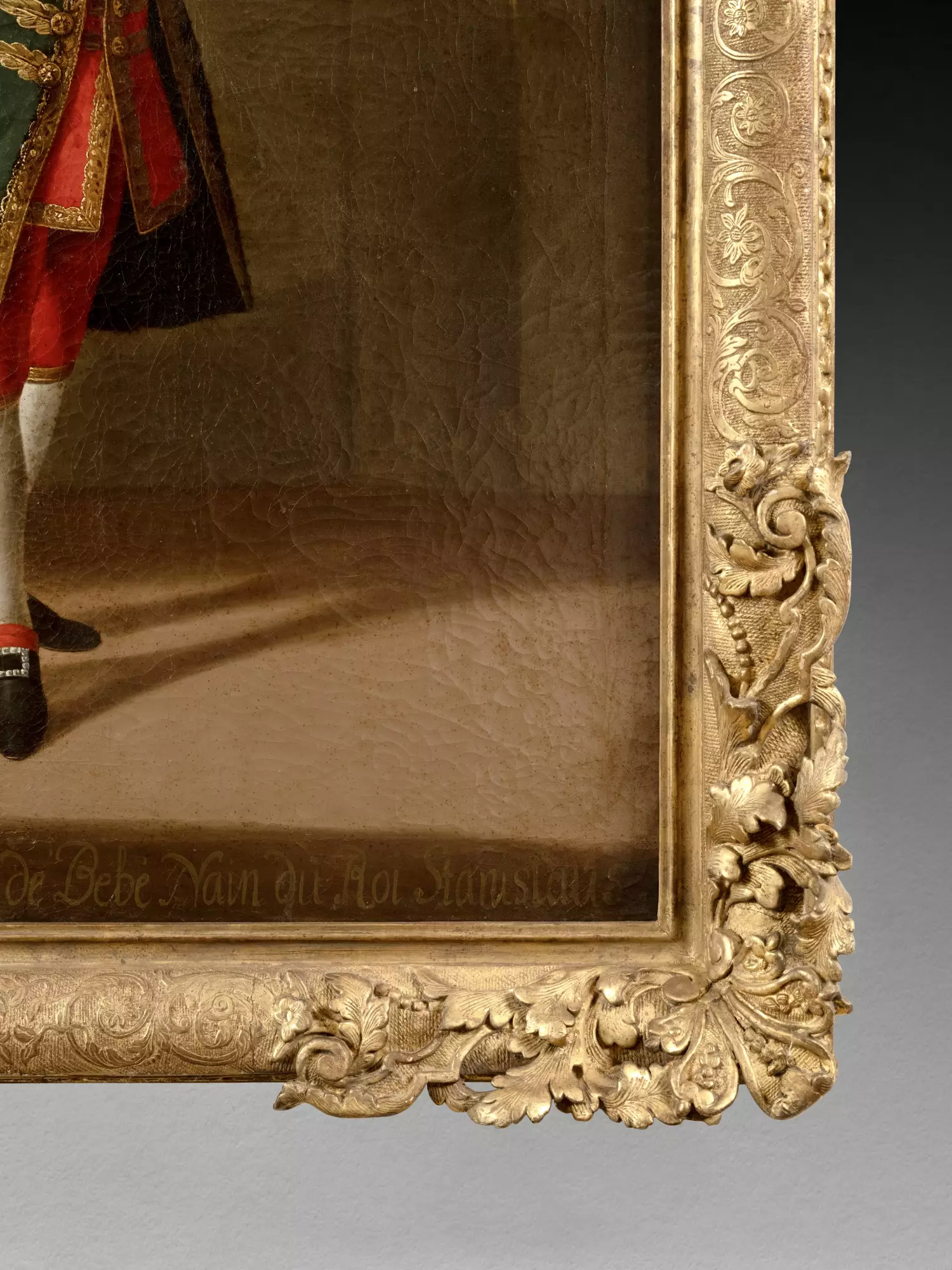
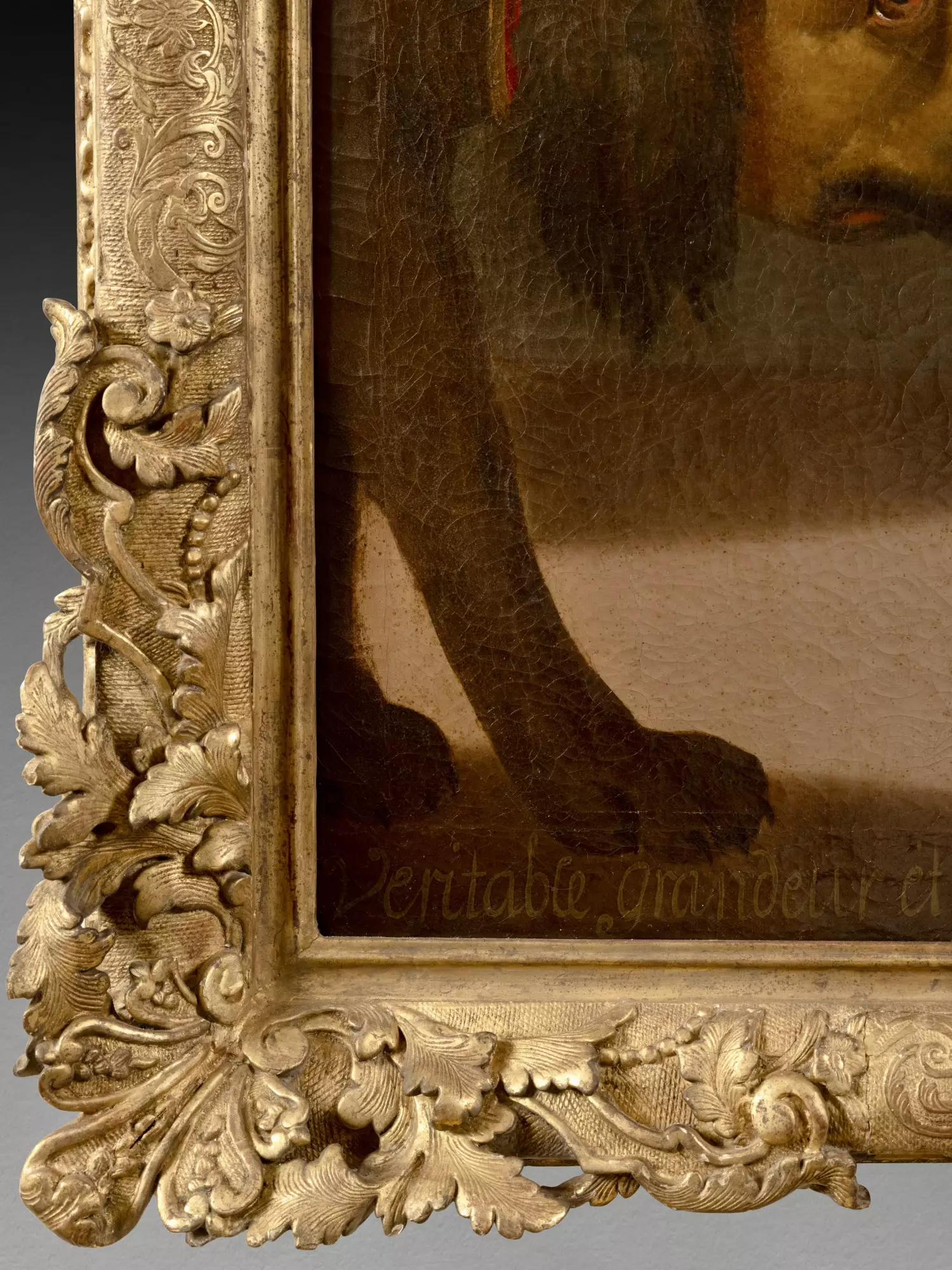
The bottom of the canvas bears the inscription "True size and portrait of Bébé, the dwarf of King Stanislas."
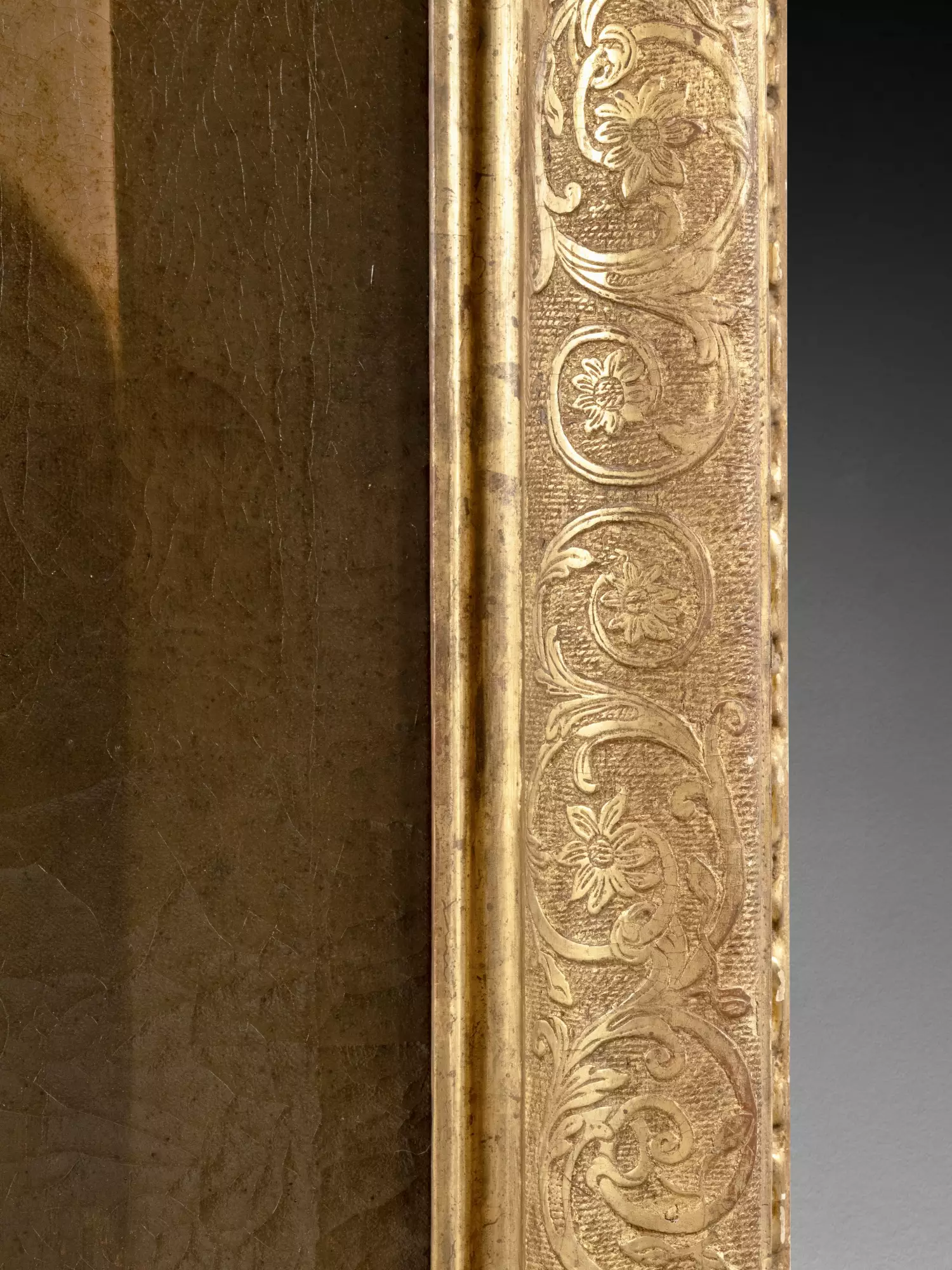
Beautifully crafted in a finely carved, engraved, and gilded Regency period oak frame.
Oil on canvas attributed to the court painter of Lorraine, Jean Girardet.
Excellent condition.
Dimensions:
Frame: H: 105 cm W: 88 cm
Canvas: H: 88 cm Length: 69 cm
Our opinion:
Baby, whose real name was Nicolas Ferry, was born to peasant parents on November 11, 1741, in the Vosges Mountains. At birth, he measured barely 20 cm and weighed 612 g: he was so small he slept in a wooden shoe. Against all odds, he survived early childhood, and his reputation as a dwarf reached the ears of Stanislas Leszczynski, the deposed King of Poland, who had been made Duke of Lorraine by his son-in-law, Louis XV. The Duke decided to keep him at his Château de Lunéville as a court dwarf. Throughout his life, the Duke held him in very special affection: dressing him like a prince, he had a wooden house built to his scale inside the château, a carriage pulled by goats, and even a cutlery service made to his size. According to contemporary accounts, Bébé was well-proportioned for a dwarf, kind, lively, a good dancer and a prankster, but also stubborn and terribly jealous. In 1759, Madame Humircka, Stanislas's cousin, stayed at the Château de Lunéville with her entourage, among whom was her dwarf, Jozef Boruwlaski, known as "Joujou." Older, more intelligent and cultured, and above all shorter (Joujou measured 72.5 cm), he quickly aroused Bébé's jealousy. Likely fearing he would be replaced in Stanislas's affections by another dwarf even more "dwarfed" than himself, Bébé threw Joujou down a fireplace in the château. Alerted by the noise, the Duke of Lorraine managed to rescue his cousin's dwarf.
Recent medical studies have shown that Bébé's dwarfism was merely a symptom of a deeper condition. He was almost certainly afflicted with progeria or Hutchinson-Gilford syndrome: very rare genetic diseases that cause striking physical changes (notably dwarfism) as well as very rapid aging. Indeed, from the age of 18 and standing at 89 cm tall, Bébé resembled an old man: he had difficulty moving and breathing, caught colds easily, and seemed tired of everything. In 1764, he fell ill with influenza and died in his mother's arms at the age of 23.
Deeply affected by Bébé's death, Stanislas had him given full funeral honors before ordering an autopsy and bequeathing his body to the King's cabinet. It was the Count of Buffon (a great naturalist of his time, whose Natural History is often compared to Diderot and D'Alembert's Encyclopedia) who received the skeleton and had it mounted. It is still preserved and studied today in the collections of the National Museum of Natural History in Paris. The Faculty of Medicine in Montpellier, for its part, holds a wax statue of Bébé wearing his own hair and clothes. This piece is believed to have been molded during Nicolas Ferry's lifetime. At the Musée Lorrain in Nancy, there is his wooden house and cutlery made to his size. Finally, the Château de Lunéville, where he spent most of his life, housed a life-size statue in Lunéville faience as well as a portrait identical to the one we are presenting today, attributed to Jean Girardet, a talented local painter who was "Painter in Ordinary to the King of Poland" in 1758. However, both of these works were destroyed in a fire at the château in 2003.
By comparing the two paintings, we can surmise that our canvas is another contemporary version of the lost one from Lunéville. Perhaps commissioned at the same time by Stanislas to adorn another of his castles, as a gift for a loved one, or intended for wider distribution. Indeed, court dwarfs were still very fashionable "accessories" among the aristocracy in the 18th century. A testament to the humanism, nobility, and wealth of their patrons, it was not uncommon for their portraits and stories to be circulated to extol the virtues of those to whom they owed everything.
* Jean Girardet (1709-1778)
Born in Lunéville in 1709 and died in Nancy in 1778, Jean Girardet was a painter from Lorraine (and later French following the annexation of the Duchy by France in 1766). Girardet was successively a seminarian, a law student, a cavalry officer, then learned painting at the Nancy academy, funder the direction of Claude Charles (1661-1747). He undertook various decorative works in Nancy before joining Duke Francis III in Florence in 1738, where he completed his studies.
In 1748, he returned to Lorraine to serve Stanislas Leszczynski, former King of Poland and Duke for life of Lorraine and Bar, by virtue of his son-in-law Louis XV of France and Cardinal de Fleury. Girardet became "Painter in Ordinary to the King of Poland" in 1758. In 1752, Girardet opened a drawing school in Lunéville, which attracted numerous students. A talented portraitist, he was the official painter of Stanislas Leszczynski, whom he immortalized from all angles, as well as those of the court, artists, and the nobility of Lorraine and Barr.